UNICEF SPARK
Designing the next chapter of UNICEF's global innovation accelerator.
- Service blueprinting
- Systems design
- Rapid prototyping
- Client
- UNICEF Office of Innovation
- Role
- Strategic Designer
- Timeline
- Sep 2025 – Mar 2026
TL;DR
SPARK had a growing global network of innovators, but the programme needed better ways to connect people, knowledge and opportunities beyond the accelerator itself.
I mapped the programme experience and co-created its next-step roadmap, then translated it into the infrastructure behind the network: a searchable database of 650+ innovators, clearer information architecture, and rapid prototypes for new community experiences.
The work gave SPARK a clearer foundation for its next phase, turning a distributed network into something the programme could begin to see, navigate and build on.
The challenge
SPARK had a growing global network of innovators, but much of the experience lived across different tools, teams and individual knowledge. The programme needed better ways to connect people, knowledge and opportunities beyond the accelerator itself.
My role
As part of UNICEF's design function, I supported SPARK as it evolved into its next phase. I mapped the programme journey, co-created its next-steps roadmap and strengthened the systems behind its community, across service blueprinting, research, information architecture and prototyping.
What the blueprint revealed
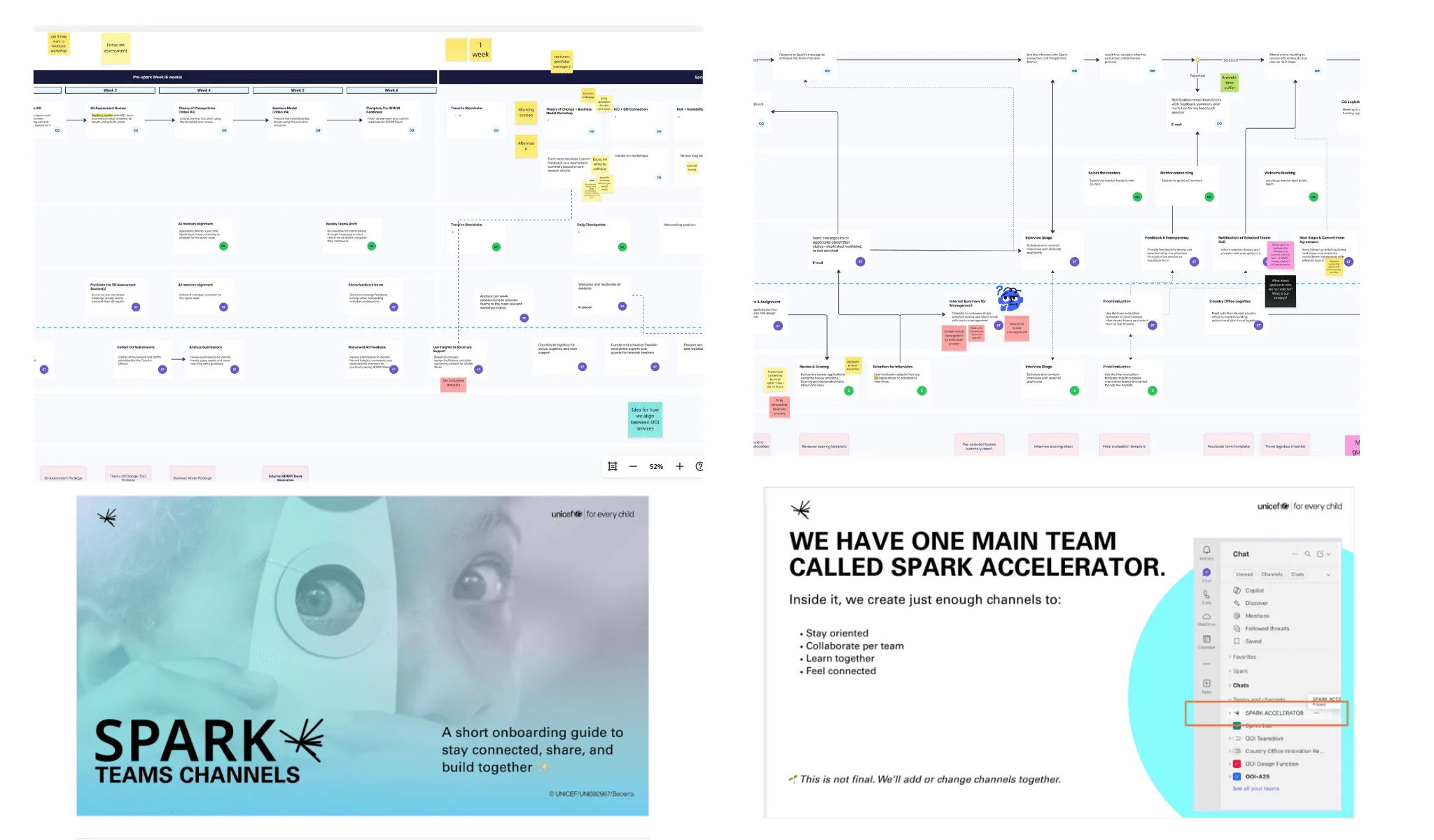
The first step was not to redesign the programme but to map it, from application to acceleration and beyond. The blueprint surfaced three gaps.
Visibility
Innovators existed but were invisible to each other.
Coordination
Country Offices didn't share learnings or coordinate across regions.
Connection
People wanted to meet and learn from each other.
Turning the map into infrastructure
I proposed shaping the roadmap around three connected layers: systems that make the network visible, people whose expertise becomes discoverable, and experiences that help them collaborate.
Made the network searchable
I built the Innovator Database, bringing 650+ profiles into one structured system, with a taxonomy designed around what enables real connections: geography, focus area, experience and stage.
Made the programme easier to navigate
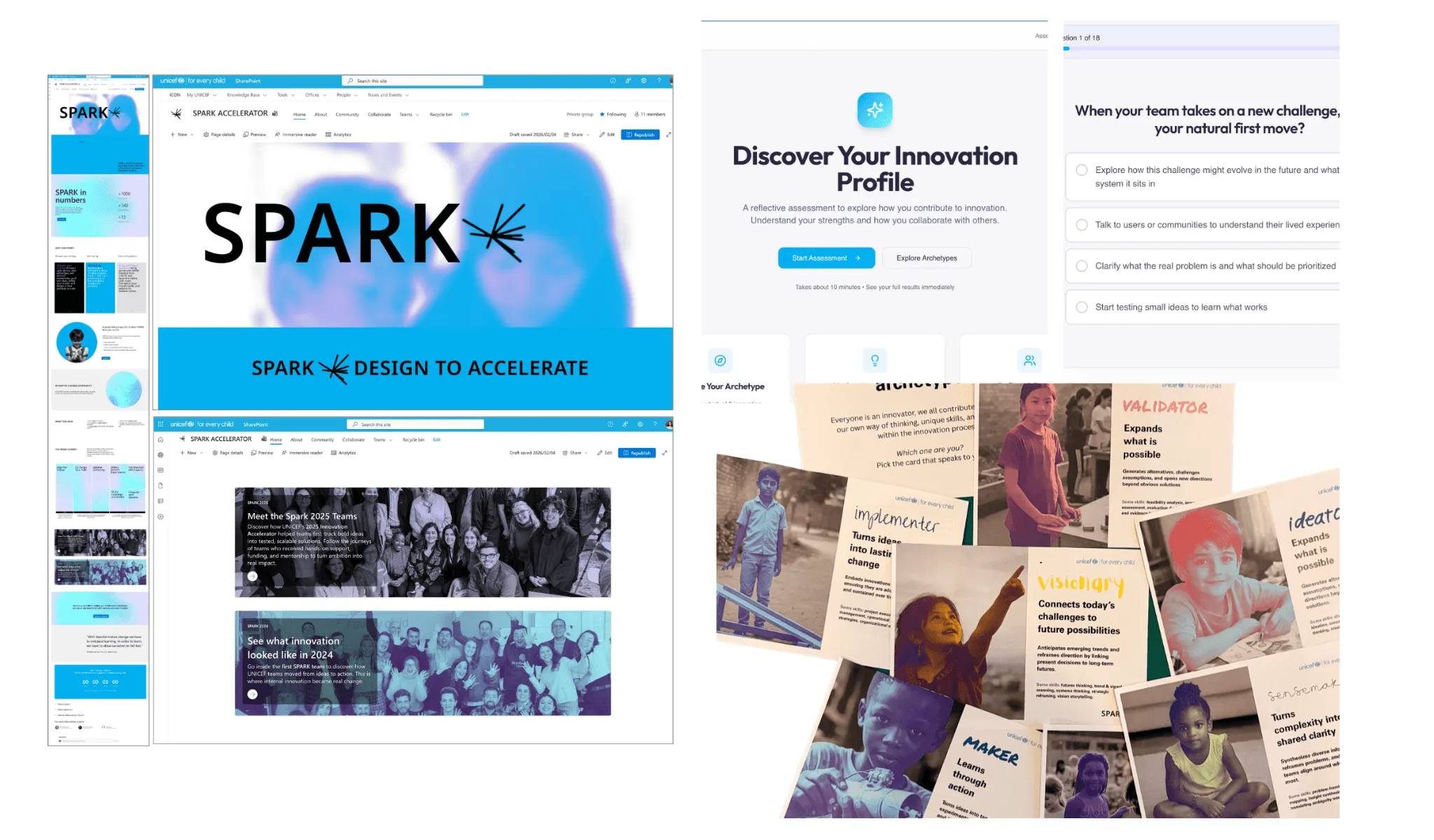
The blueprint and roadmap became living tools for the team to spot gaps and dependencies. I also supported the rebuild of SPARK's SharePoint information architecture.
Prototyped what could come next
With vibe coding, I built a Prototype Assessment Tool and contributed to SHE BUILDS, a global session where participants built functional AI prototypes together.
Reflection
A network doesn't become connected just because people share a programme. It needs infrastructure that helps them find each other.
Next, I'd build on that infrastructure rather than add features: test how innovators use the database, keep evolving the blueprint with new cohorts, and explore AI-assisted matching once the data is reliable.