CAREer Diary
Helping young people move from career uncertainty to imagining what comes next.
- Participatory research
- Co-design
- Futures thinking
- Client
- Project CAREer, Erasmus+ KA2
- Role
- Service Designer
- Timeline
- December – May 2025
- Countries
- Estonia, Italy & Spain
TL;DR
CAREer focused on employability, but research revealed a deeper gap: young people needed more support to reflect, build agency and imagine possible futures. The existing diary felt too institutional and rigid.
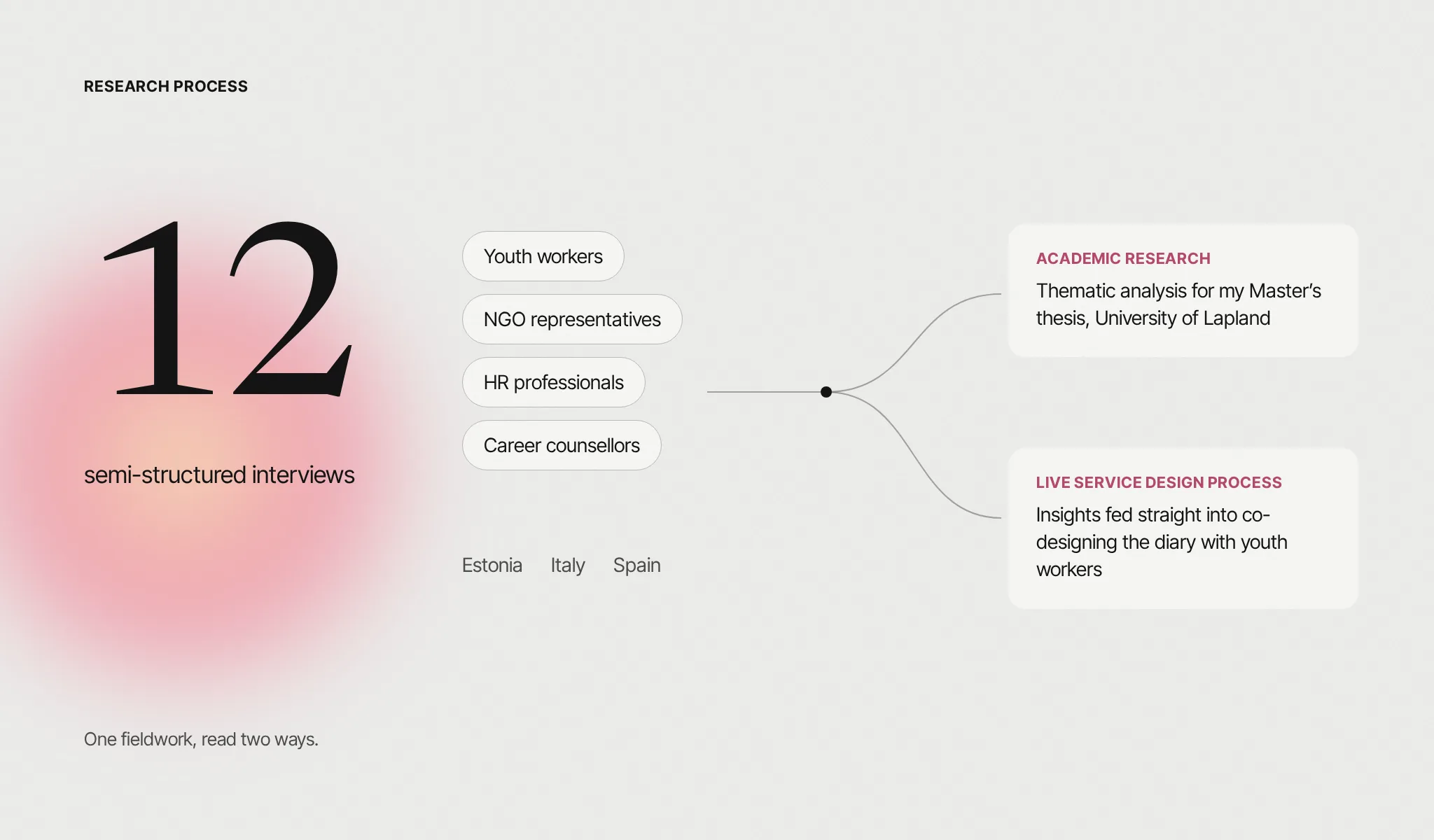
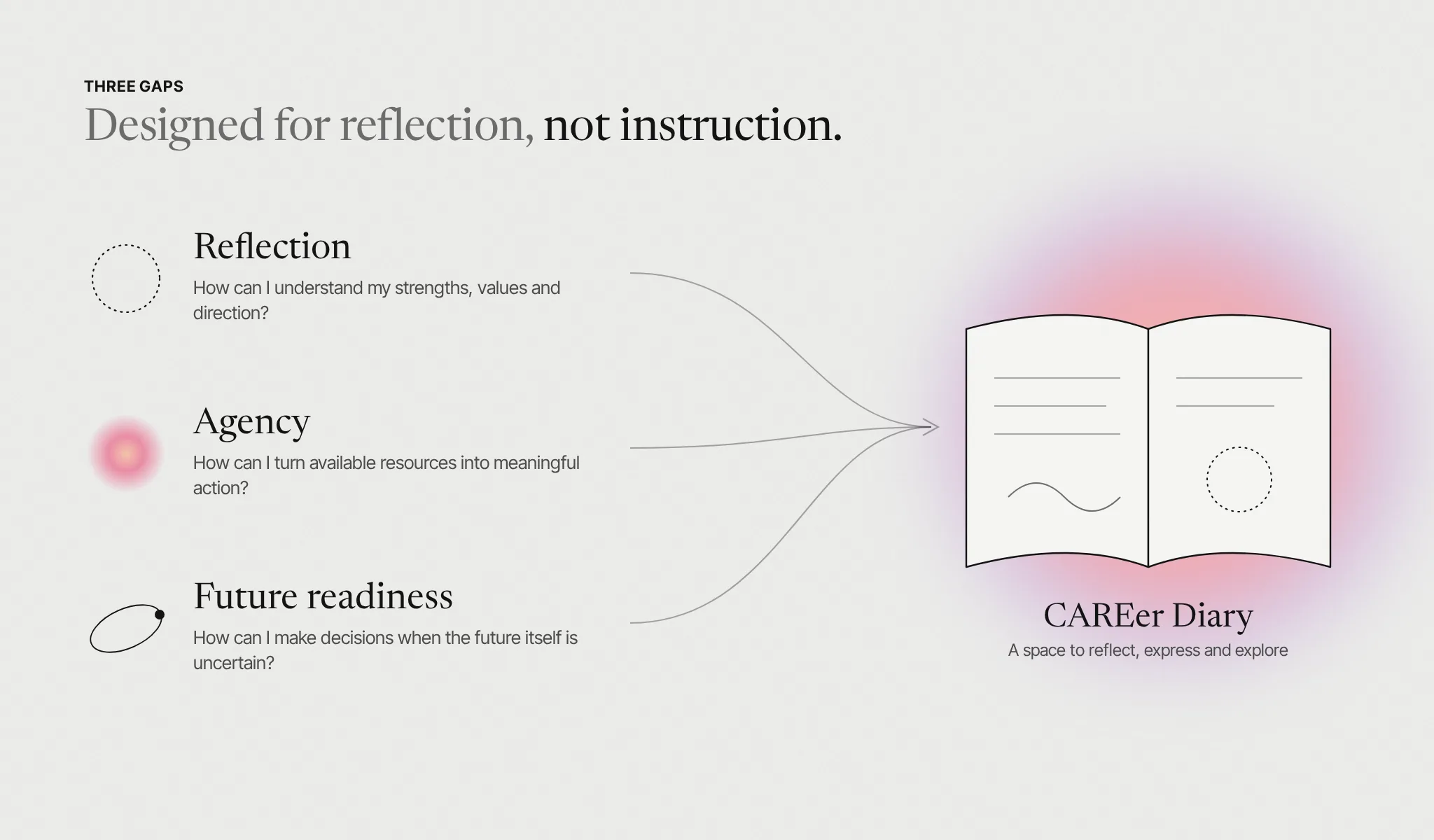
Participatory research across Estonia, Italy and Spain revealed three gaps: reflection, agency and future readiness.
I co-designed a more personal, accessible diary with youth workers and participants, then extended it through my Master’s thesis with a Futures Thinking layer.
The diary evolved from a career worksheet into a space for reflection, self-expression and future exploration.
The problem
CAREer emerged from an Erasmus+ initiative supporting youth employability across Estonia, Italy and Spain. The starting assumption was familiar: build skills, improve employability, create better pathways into work.
Across Europe, young people face increasingly complex transitions into the labour market. Around 20% of youth globally are NEET, navigating not only unemployment but structural barriers, lack of agency and uncertainty about their future. They are asked to make decisions about their future without always having the tools to understand who they are, what they want, or what might be possible.
Three gaps emerged
Design
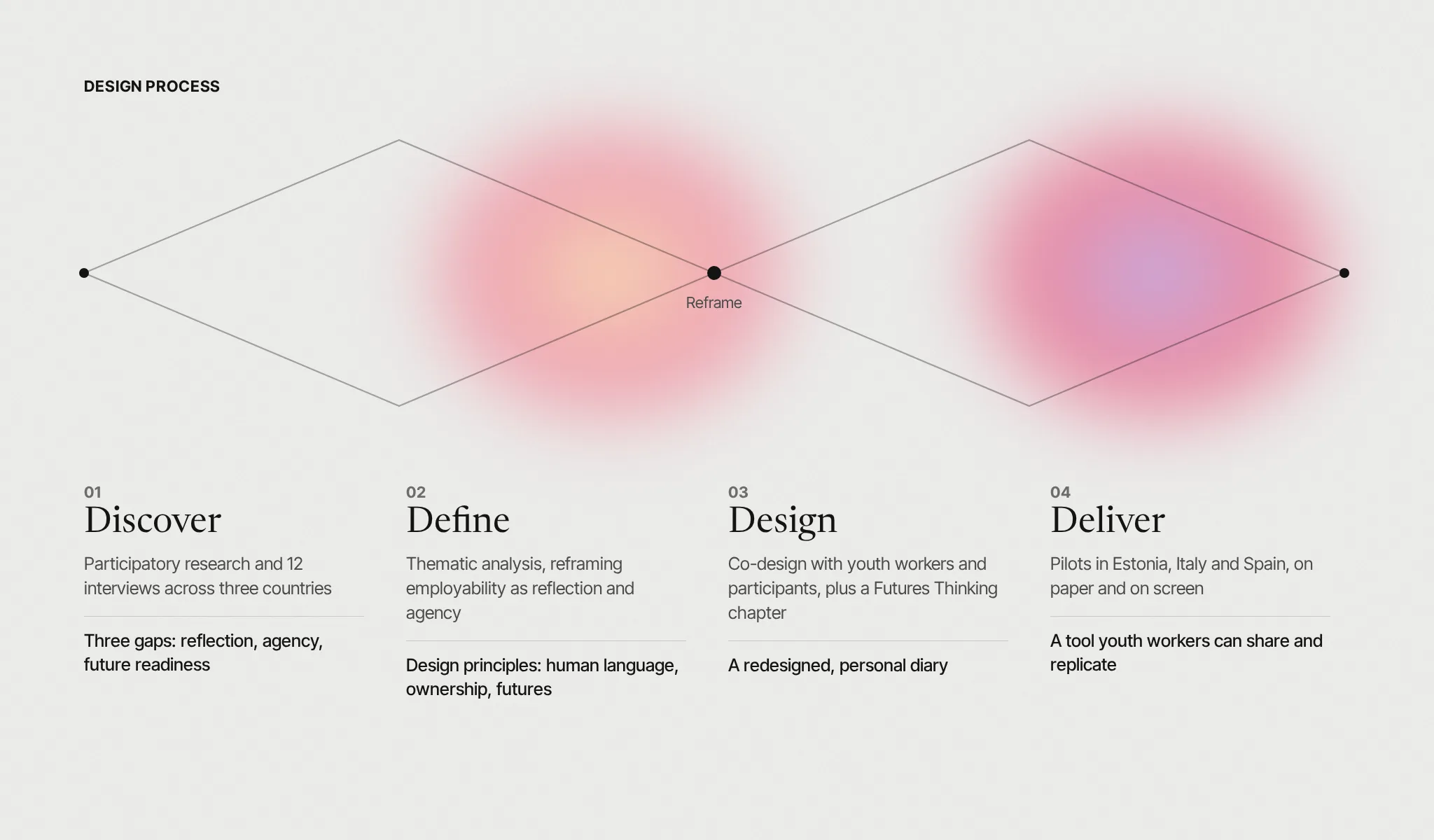
I approached the redesign through participatory research, co-design and futures thinking, working alongside youth workers, NGO partners and young participants across the CAREer ecosystem.
First, we redesigned the existing diary together. We made the language more colloquial and human, opened up space for writing and self-expression, introduced more interactive elements, and explored the diary as a physical object that could be personalised, rather than simply completed.
But the research pointed to another opportunity. Most career tools ask young people to look backwards at their experience or forwards towards a specific career decision. Very few create space to explore uncertainty itself.
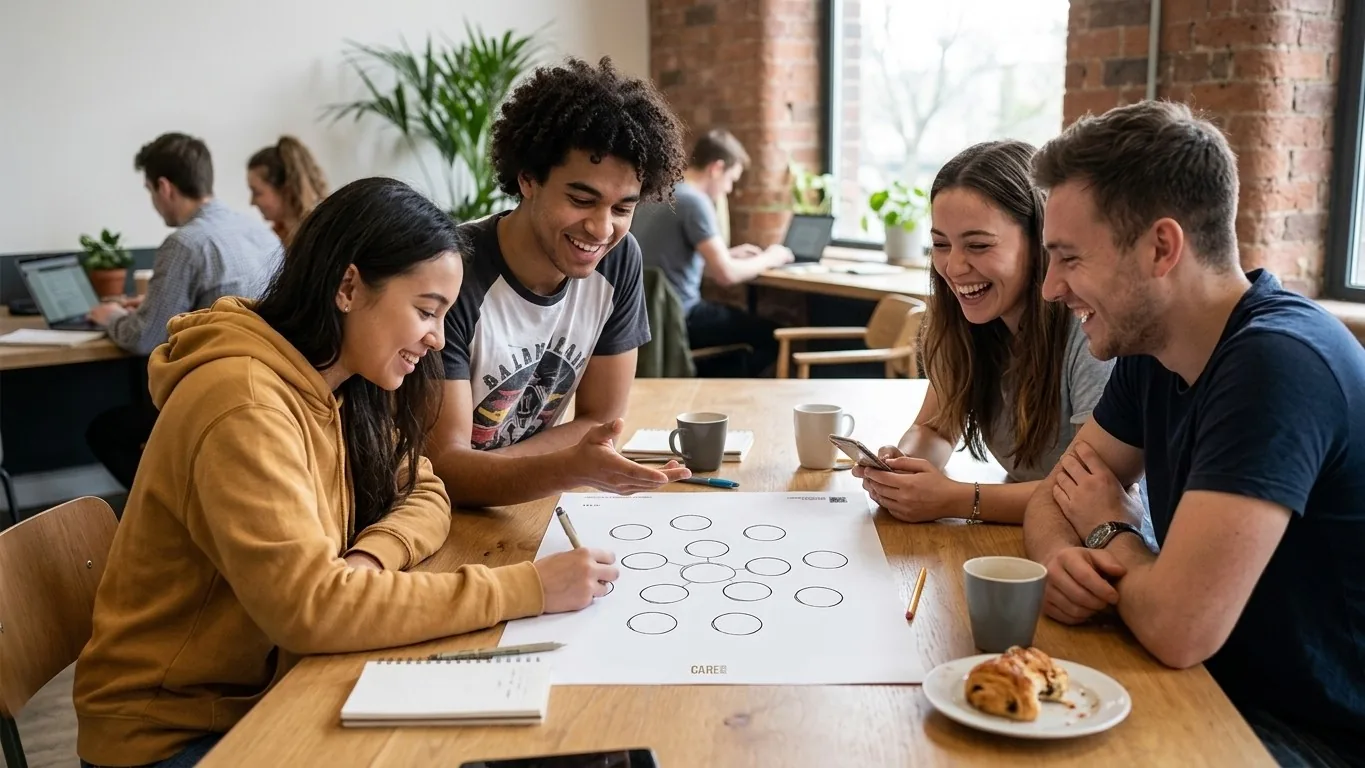
What if the diary could help young people imagine before they decide?
A Futures Thinking chapter
For my Master’s thesis, I introduced a Futures Thinking chapter that translated foresight methods into accessible exercises for personal reflection.
Future Wheel
Explore how one possible future could create different consequences and opportunities.
Horizon Scan
Connect wider social and technological changes to your own life and possibilities.
10 Years Time Travel
Imagine a meaningful future in detail, moving beyond abstract aspirations into a tangible picture of everyday life.

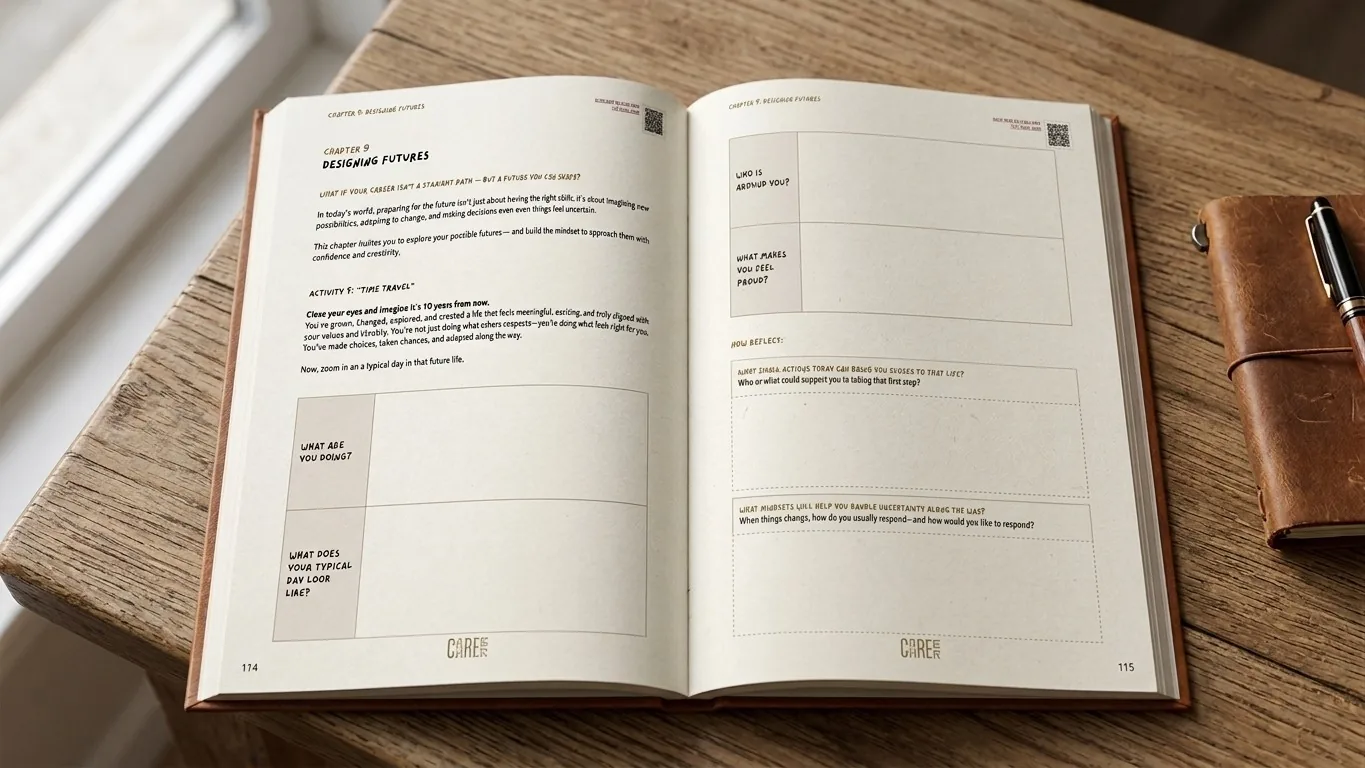
Reflection
Reflection isn’t automatically available to everyone. It is a capability that can be supported, practised and designed for.
Small design decisions mattered: changing the language made the tool feel more human; leaving space for personal expression created ownership; and introducing futures thinking gave young people permission to explore possibilities without having to commit to one answer.
It also changed how I think about the role of the youth worker. Rather than simply delivering career guidance, they can create the conditions for young people to reflect, question and imagine for themselves.
The core insight
The most important shift wasn’t the diary itself. It was moving from designing answers for young people to designing the conditions in which they can shape their own.
Academic study
This project also became the foundation for my Master’s thesis at the University of Lapland, where I explored the relationship between youth employability, agency, reflection and futures thinking in greater depth.
The thesis documents the research methodology, stakeholder interviews, thematic analysis, and the development of the Futures Thinking framework behind the diary extension.