Accessible Tallinn
A systemic approach to a shared understanding of city accessibility.
- Systems thinking
- Service design
- UX/UI & visual design
- Client
- Tallinn Social Welfare and Healthcare Department
- Role
- Service Design, UX/UI Design, Futures Thinking
- Timeline
- Sep – Dec 2024
- Research
- 21 stakeholder interviews

Tallinn already had accessibility regulation, mapping tools and people working on the issue. The challenge was less about a lack of initiatives and more about different sectors understanding accessibility differently.
TL;DR
Tallinn had regulation, tools and committed stakeholders, but accessibility meant different things across government, business, NGOs and citizens.
We reframed the challenge from improving compliance to creating alignment, and designed an annual cross-sector forum around a shared vision for accessible housing and urban development.
A tested forum concept, including its identity, website, programme, participant experience and a roadmap towards a pilot in December 2025.
The problem
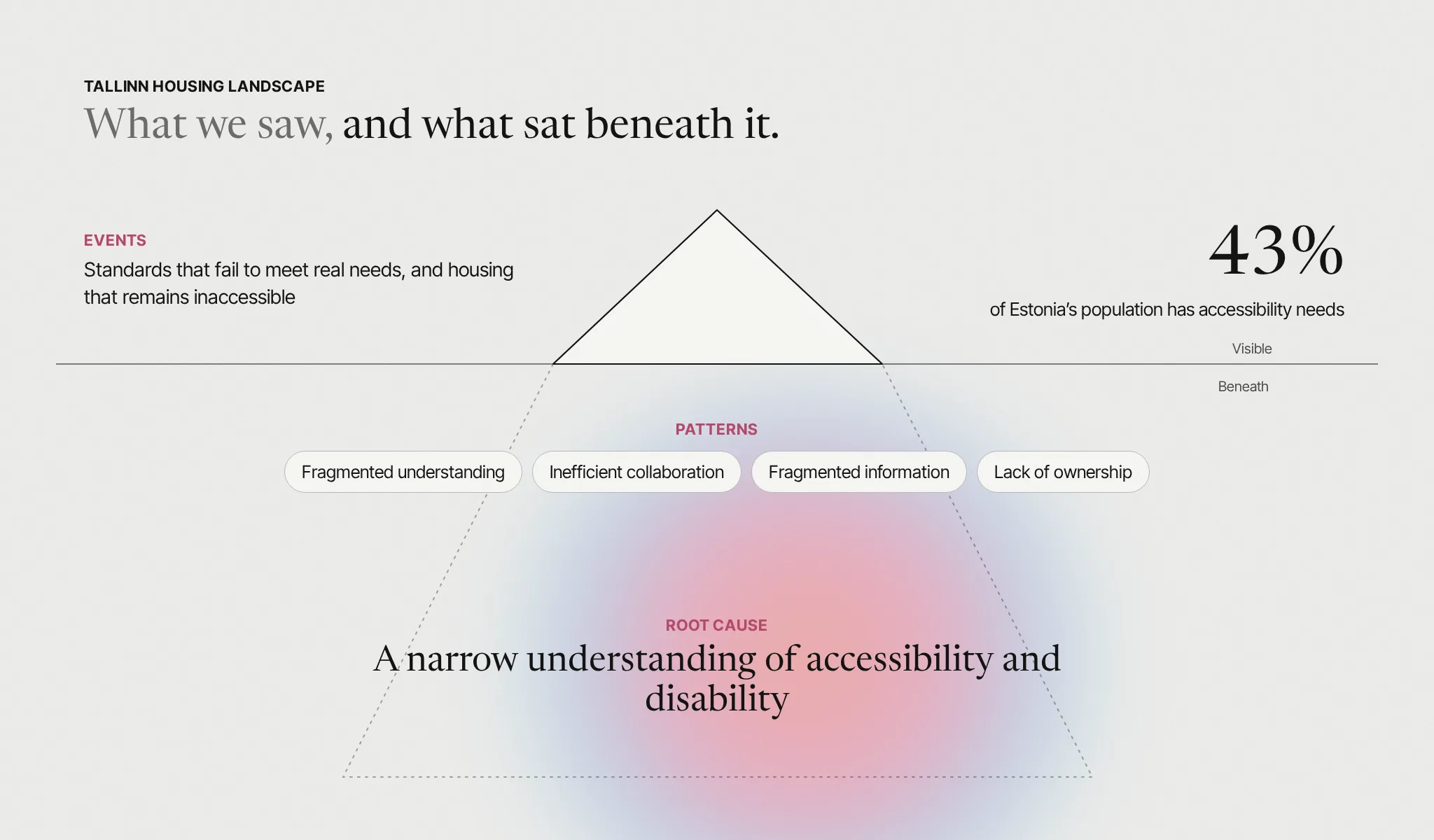
Accessibility in housing is often framed around disability. In practice, it affects a much broader population, including older people, parents and people experiencing temporary conditions. In Estonia, 43% of the population has accessibility needs, yet many housing and living environments remain inaccessible.
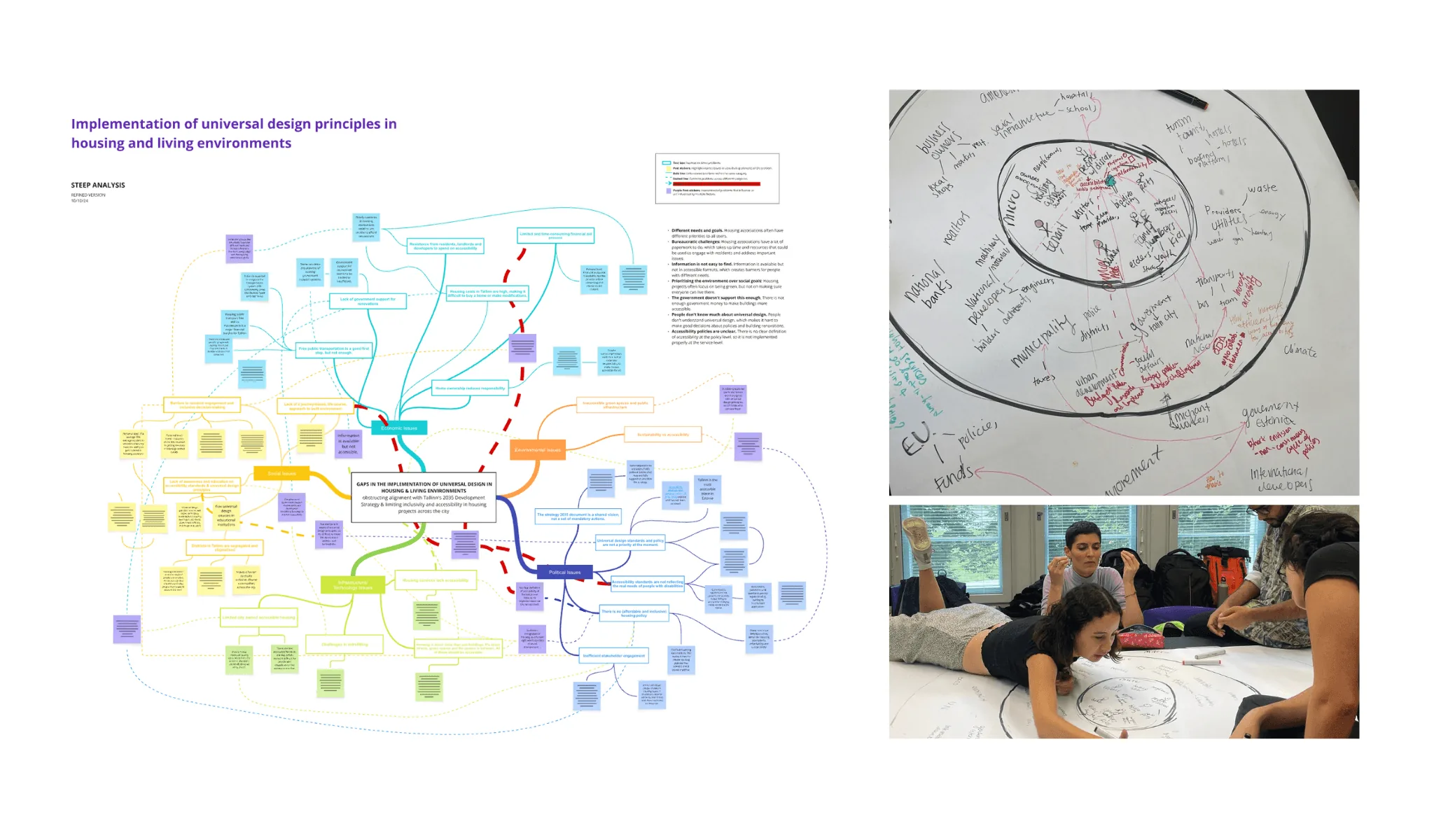
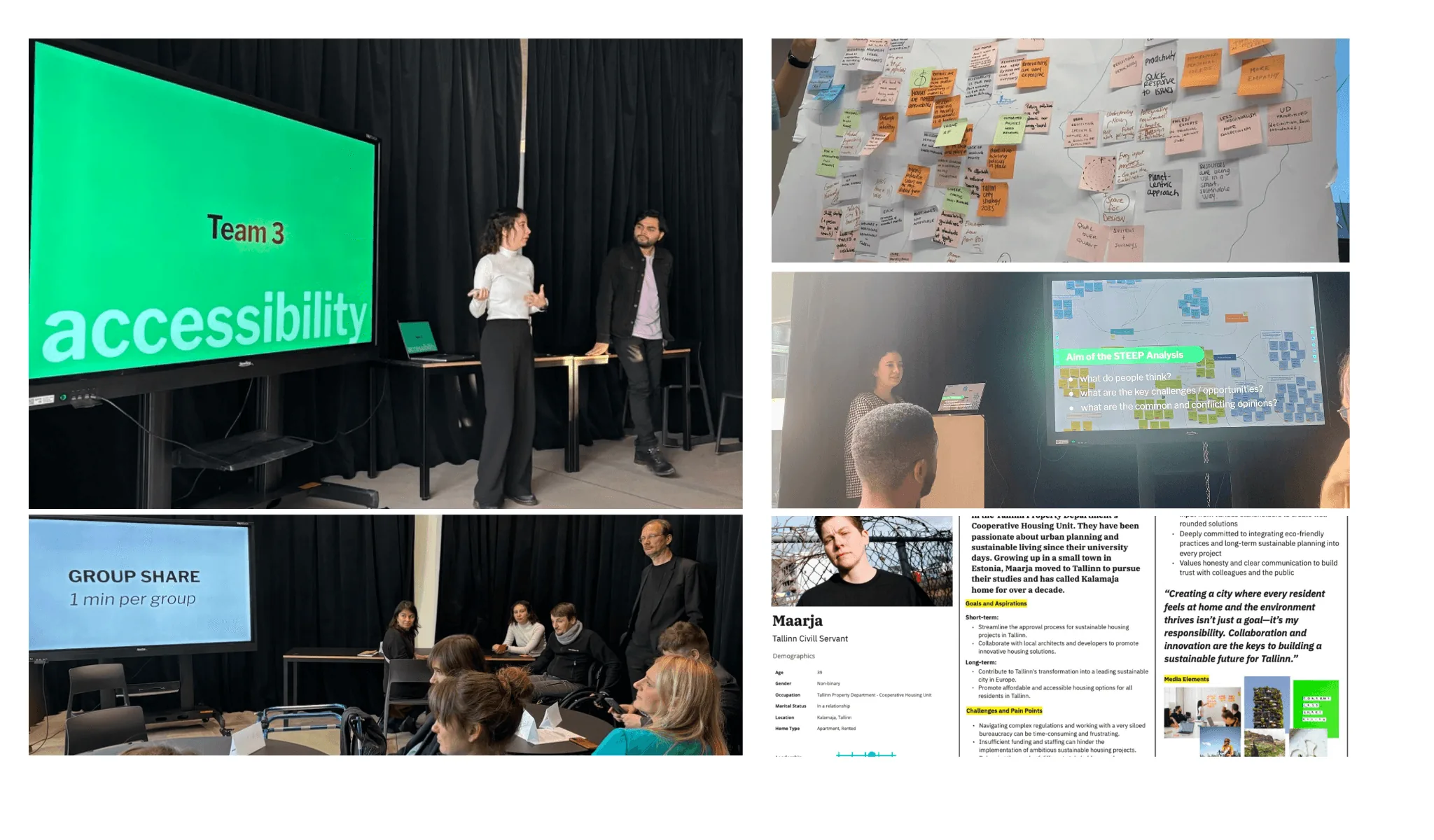
We started by looking at what was already in place. Through desk research, STEEP analysis and 21 stakeholder interviews, we found that Tallinn already had regulation, mapping tools and people working on accessibility. The bigger issue was how those efforts connected.
Four challenges kept emerging
Fragmented understanding
Different sectors interpreted accessibility differently.
Inefficient collaboration
Stakeholders often worked in parallel rather than together.
Fragmented information
Knowledge and efforts weren’t consistently shared.
Lack of ownership
There was no clear sense of who was responsible for driving change.
The deeper issue
Tallinn didn’t lack initiatives. It lacked shared ownership and alignment around what accessibility should mean in practice.
Designing the intervention
Instead of proposing another policy or digital tool, we designed a systemic intervention focused on alignment and collaboration.
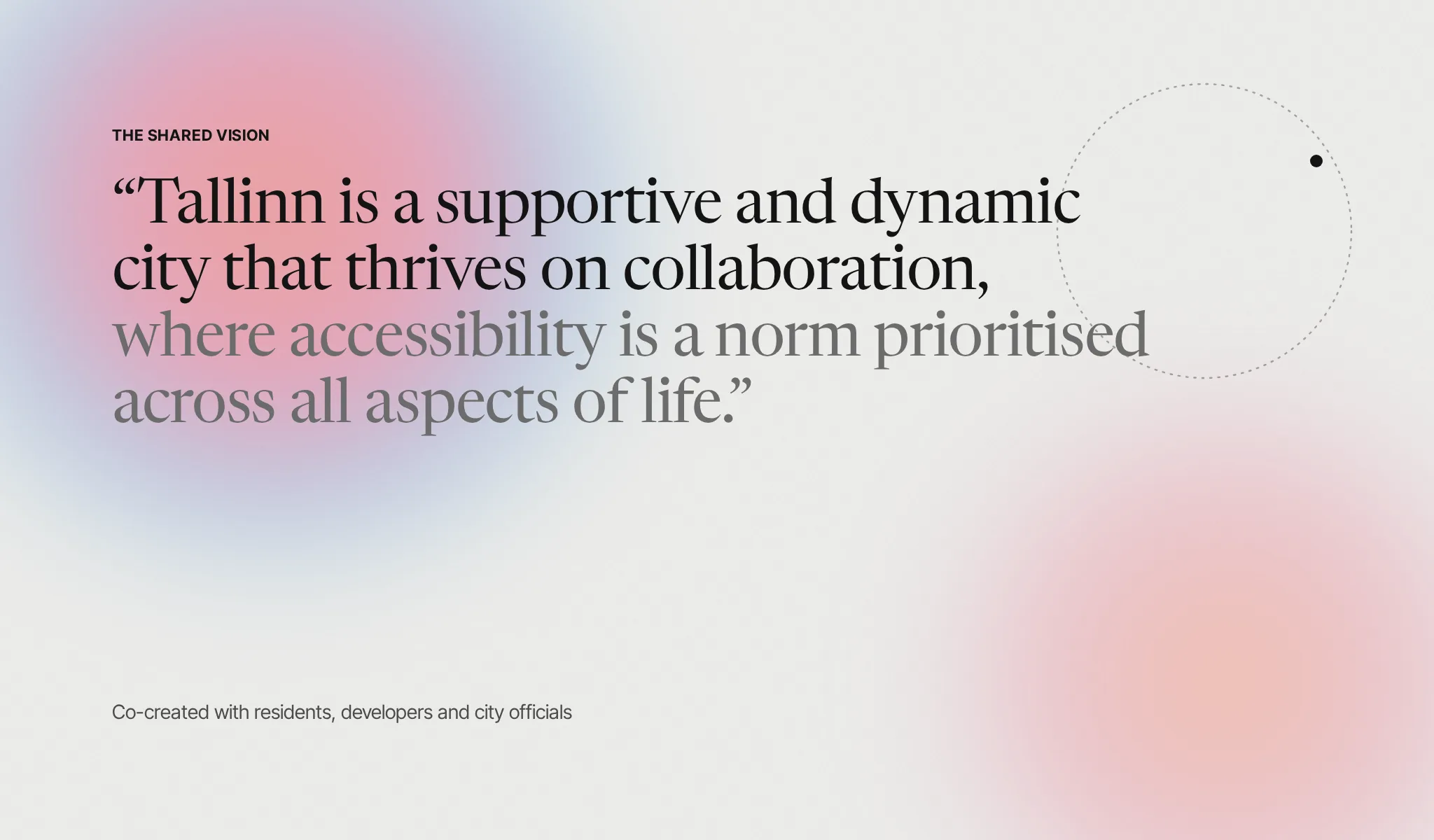
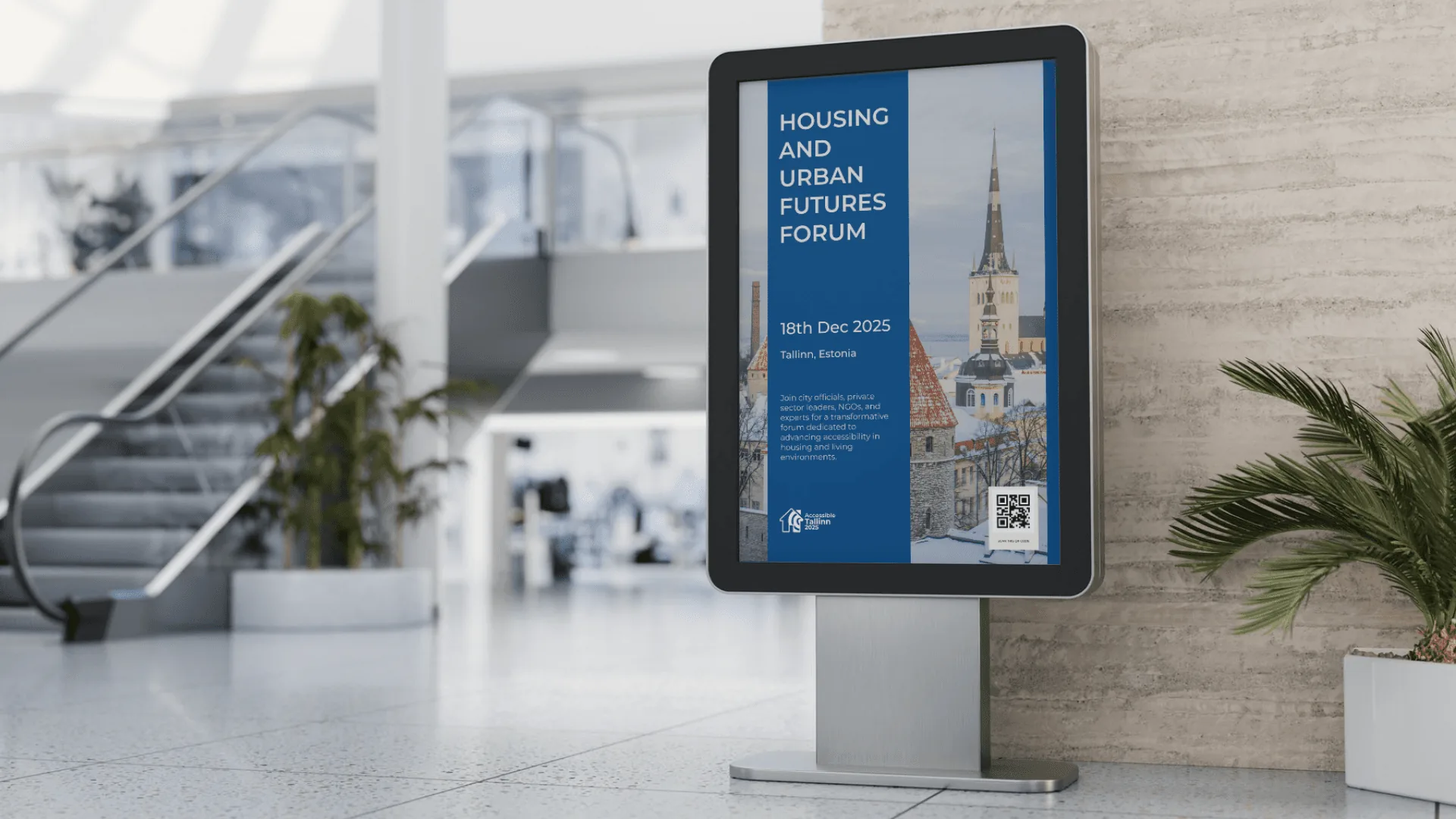
The result was the Accessible Housing Forum: an annual, hybrid gathering designed to bring the people shaping Tallinn’s built environment into the same conversation.
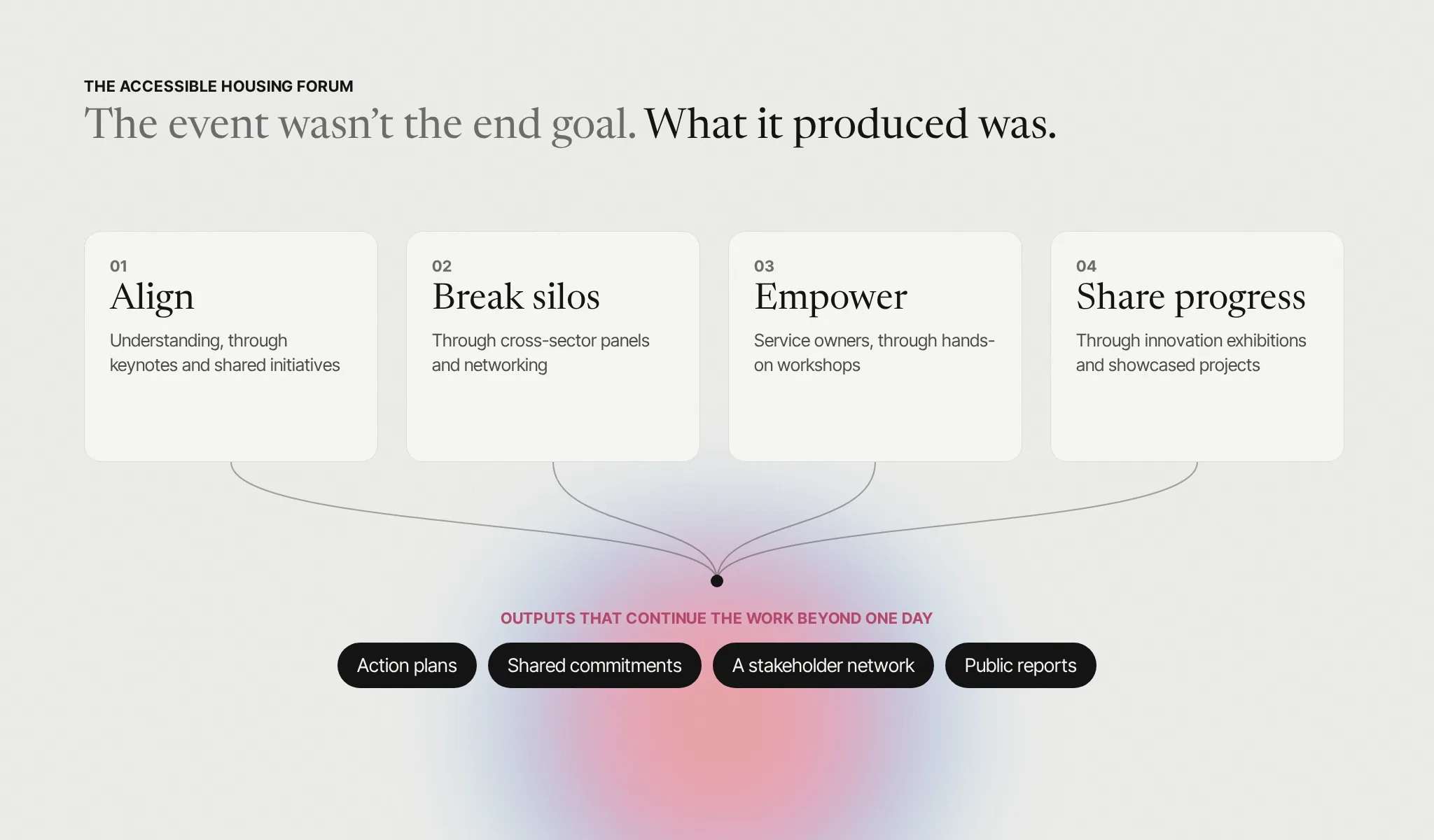
Four functions
The event itself wasn’t the end goal. We designed it to produce tangible outputs that continue the work beyond one day: action plans, shared commitments, a stakeholder network and public reports.
From system to experience
Together, we mapped the relationships between city departments, residents, NGOs, developers and other actors to understand where alignment was breaking down and where a forum could create new connections.
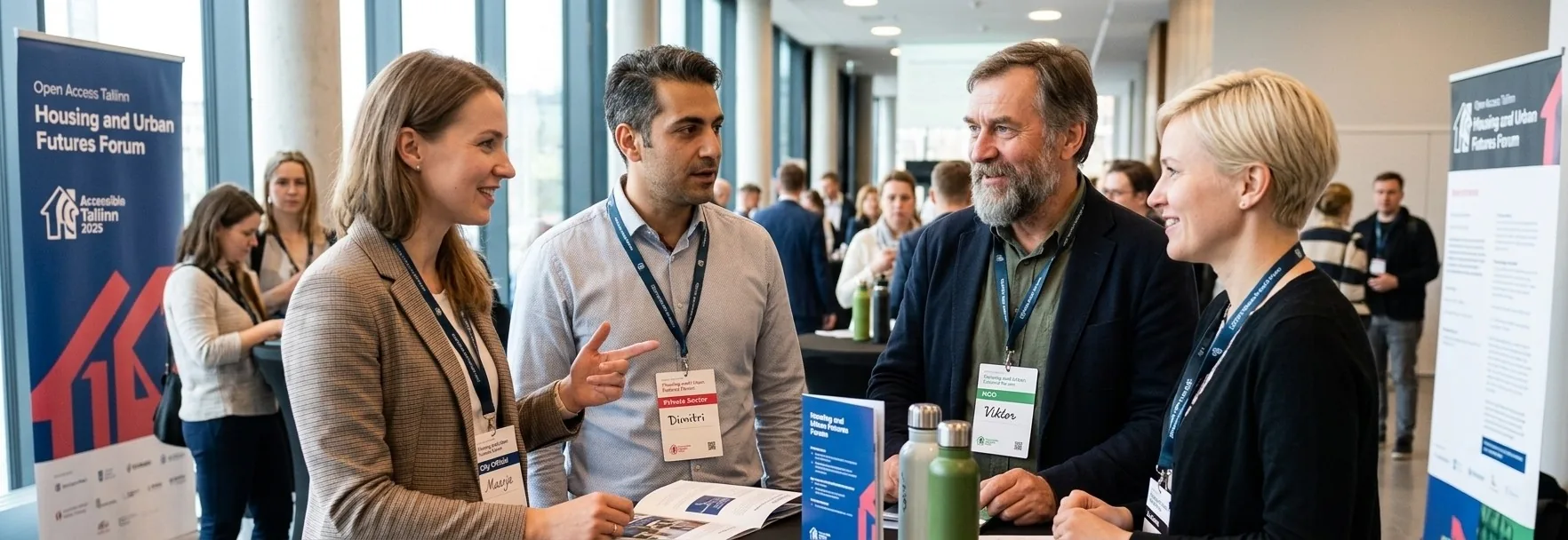
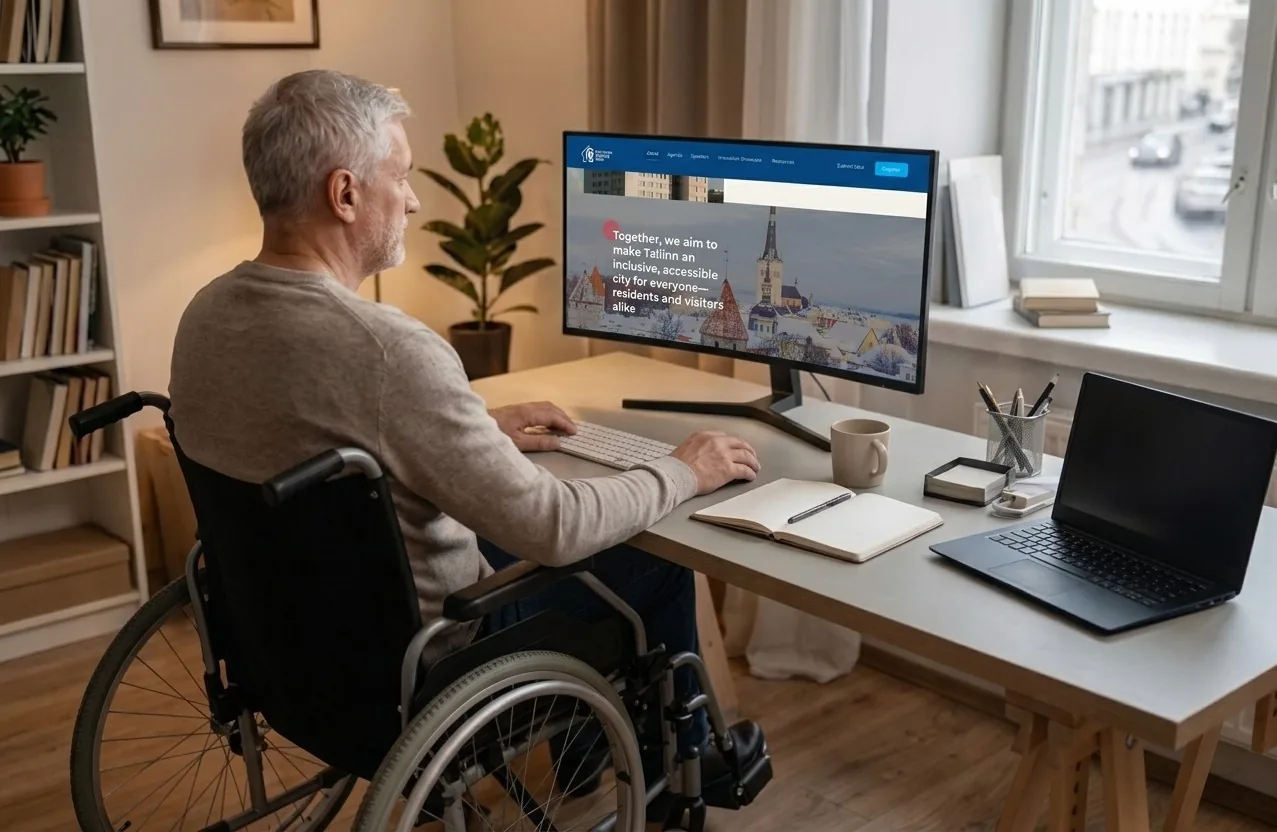
I then led the UX/UI and visual design for the forum, translating that strategy into a tangible experience: an MVP website with registration, agenda, speaker profiles and idea submission, alongside the forum’s visual identity, participant badges and digital items.
Each touchpoint reinforced the forum’s systemic purpose: bringing different sectors into the same conversation, making participation visible, and creating pathways for ideas to move into action. The result was more than a conference concept. It was a proposed recurring mechanism for alignment, collaboration and accountability.
What we’d test next
Pilot the forum
Measure whether participants develop a shared working definition of accessible housing.
Track collaboration
Compare cross-department and cross-sector coordination before and after the event.
Follow the outputs
Track action plans and commitments to see whether the forum leads to sustained action beyond the event itself.
The goal wasn’t to create another initiative around accessibility. It was to create a structure that could help existing initiatives move in the same direction.