BloomGuard
Designing a fertility platform around the journey, not the content.
- Product strategy
- UX/UI design
- Service blueprinting
- Client
- Innovation Lab, SDSI
- Role
- Product Designer
- Timeline
- Feb – May 2024
- Award
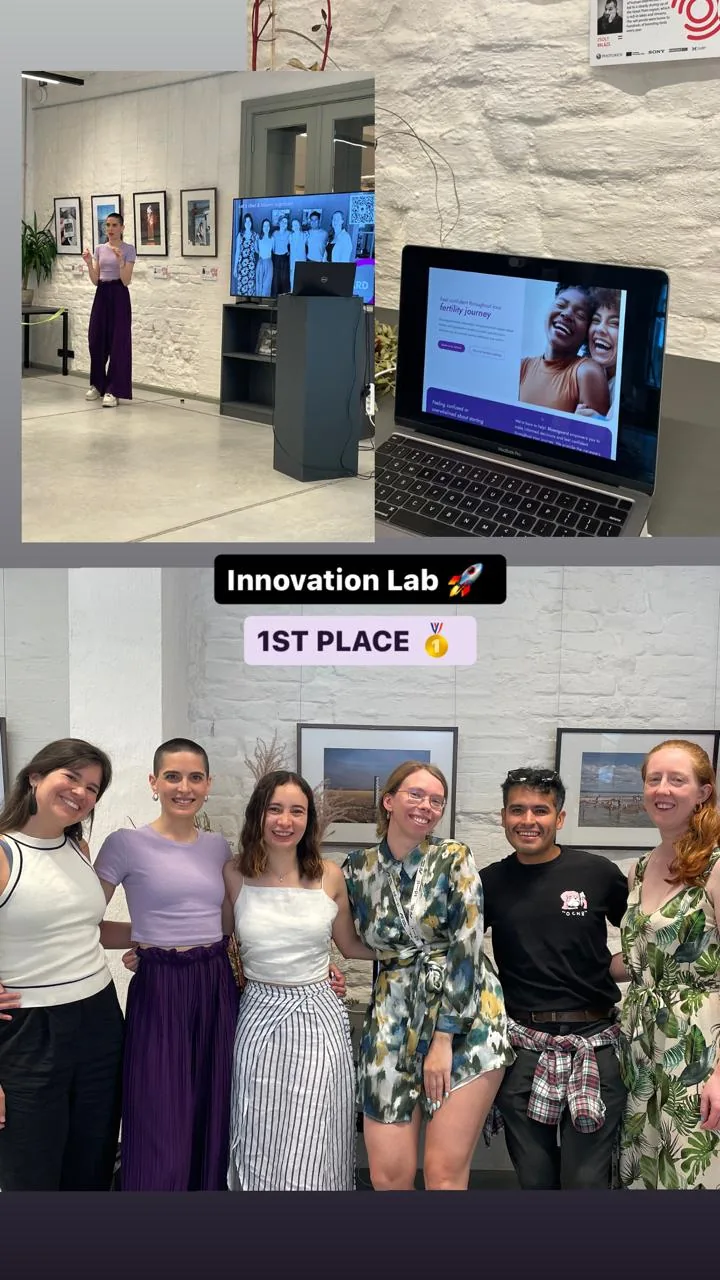
- 1st place, Most Innovative Business Idea

BloomGuard is a fertility platform concept exploring how AI guidance, human advisors and community support could work together around one adaptive journey, instead of living as separate, disconnected features.
TL;DR
Fertility information is everywhere, but nobody helps people make sense of it or know what to do next.
One adaptive roadmap, not another content library, with AI guidance, human advisors and community support feeding into it.
Validated with real users across three rounds of testing, clinically reviewed by a practising IVF specialist, and awarded 1st place for Most Innovative Business Idea.
Navigating fertility can be overwhelming
Fertility is one of the most consequential decisions people make, yet the experience is often fragmented across clinics, search engines, forums, apps and word of mouth. Information is everywhere, but the real challenge is knowing what applies to you, what to do next, and when to seek support.
We started with a question, not a feature list
What if a fertility platform helped people navigate their journey, rather than simply giving them more information?
A gap in the market
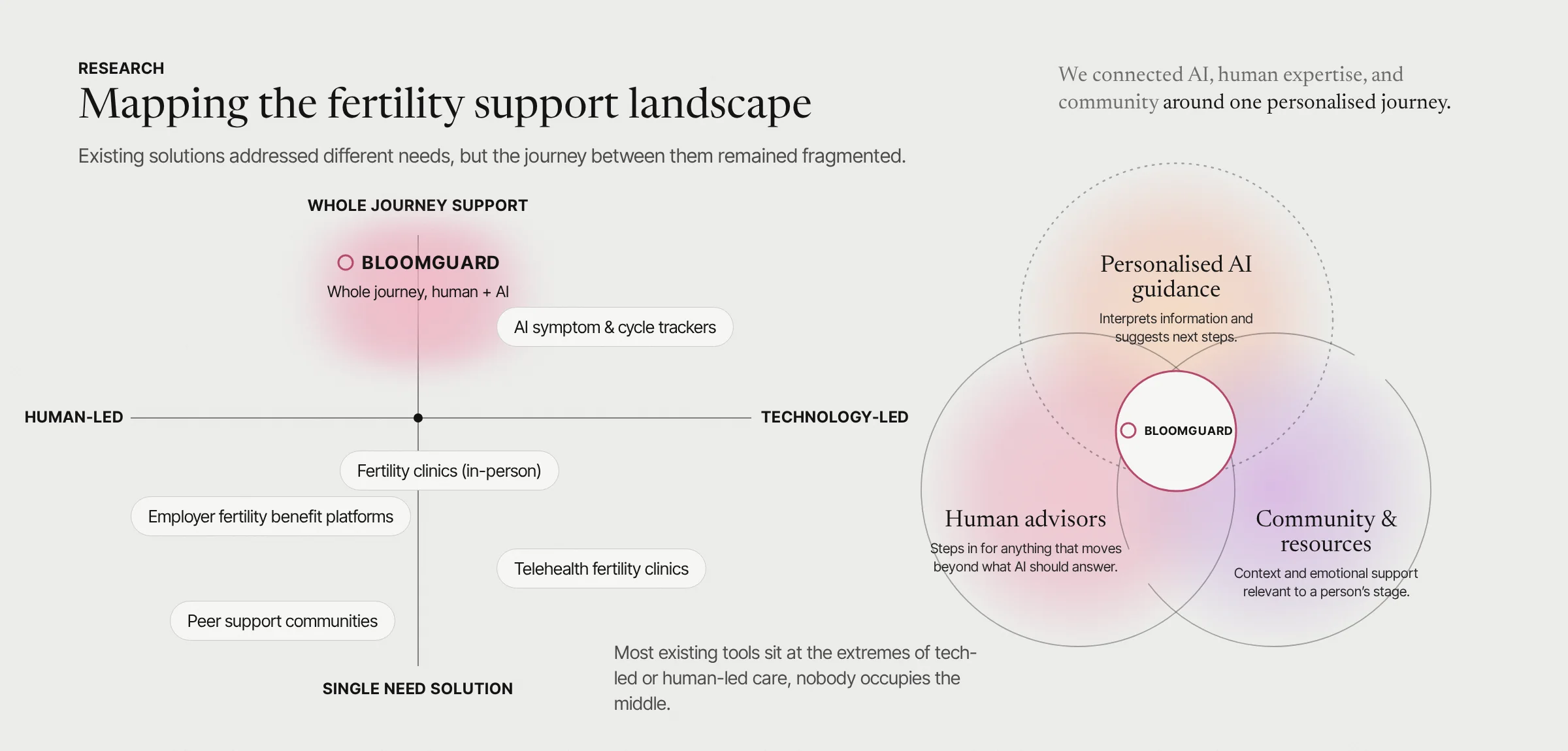
When we mapped the fertility-tech landscape, two patterns emerged. Technology-led care was using AI and data to make fertility support more personalised and clinical. Human-led care was making information, benefits and professional support more accessible. But the journey between the two remained fragmented.
That became our opportunity: bring personalised digital guidance and human support into the same experience, with an evolving journey at its centre.
Reframe
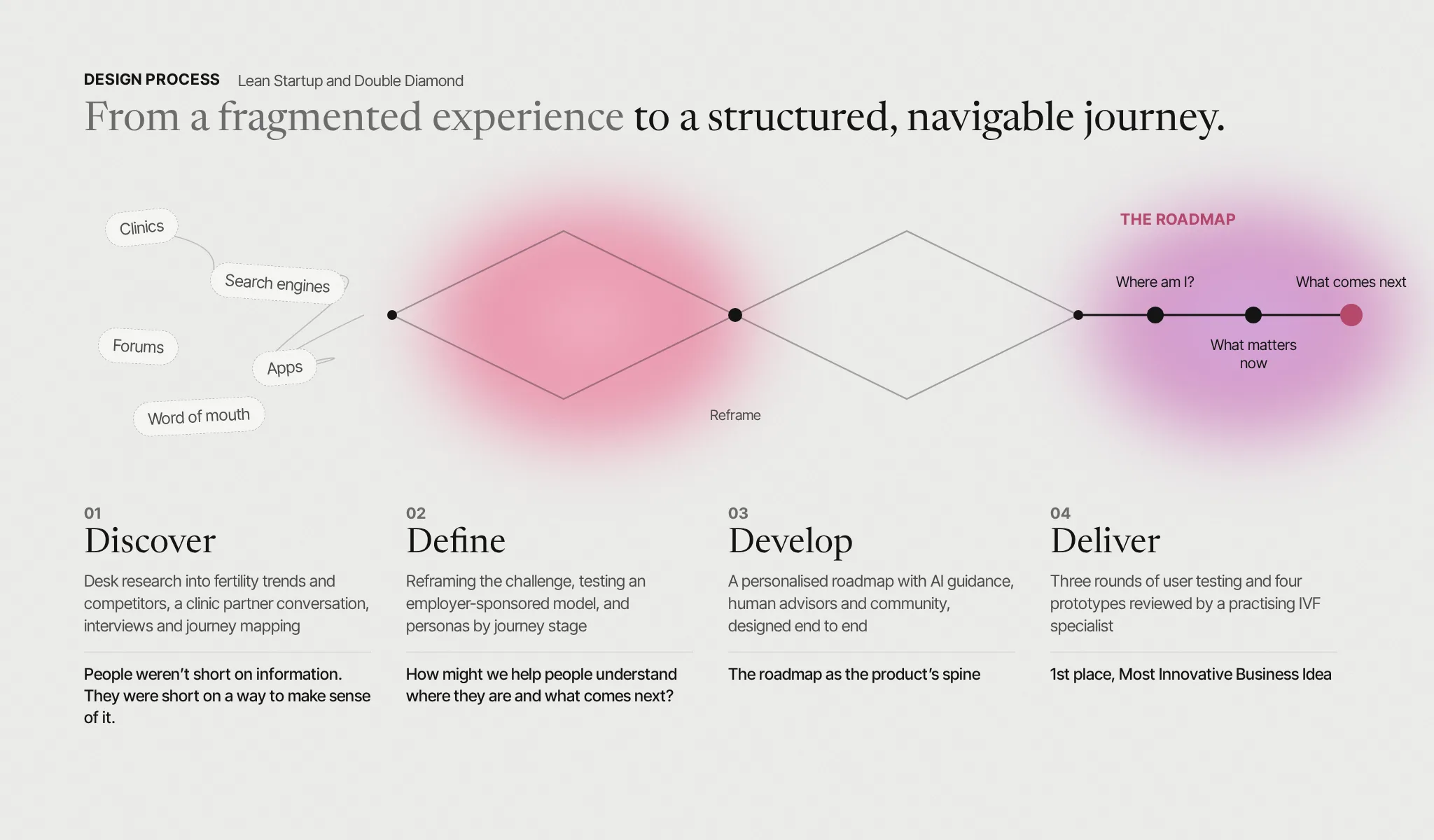
We approached research pragmatically: desk research into fertility trends and competitors, a conversation with a fertility clinic partner to pressure-test our assumptions against clinical reality, and interviews and journey mapping to understand both the emotional and practical sides of the experience. Early on, we also tested the concept as an employer-sponsored benefit, before our research pointed us towards building directly for individuals.
People weren’t short on information. They were short on a way to make sense of it.
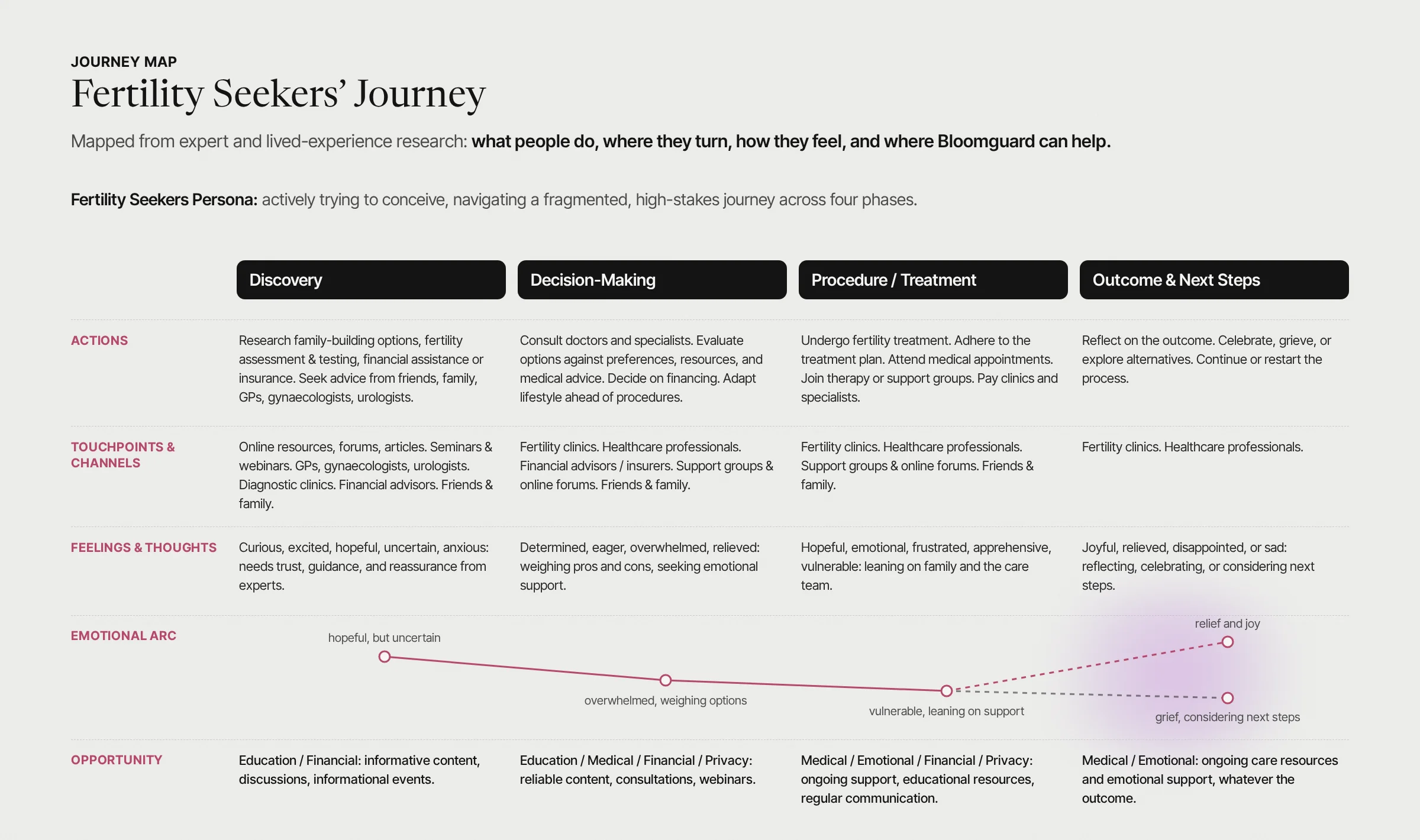
The journey isn’t linear, either. Someone might move from exploring their options to actively trying to conceive, back to research, into testing and towards treatment. As their circumstances change, so do their questions, needs and decisions.
Personas by journey stage, not demographics
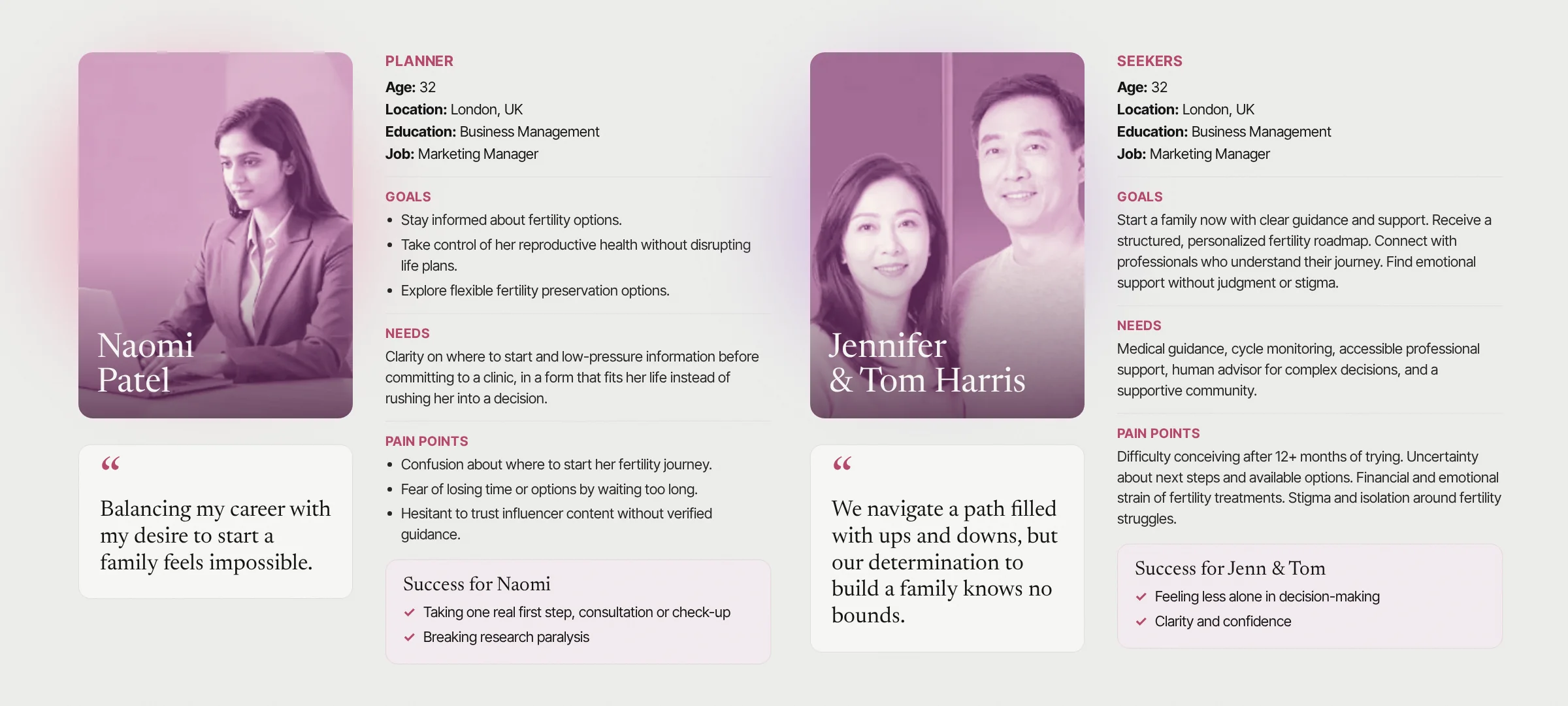
If fertility isn’t a linear journey, the product shouldn’t assume everyone starts in the same place. We translated our research into two personas based on where someone is in their journey, rather than who they are.
Rather than creating separate products for each audience, we designed one ecosystem with different entry points, so people can start from where they are and access the right support as their journey evolves.
Planners
Thinking about fertility further ahead and looking to understand their options before they need to act.
Seekers
Actively trying to conceive and looking for guidance, monitoring and professional support.
The roadmap
Our central idea was simple: give people a clear sense of where they are, what matters now, and what could come next. Instead of another content library, we designed BloomGuard around a personalised roadmap, supported by three layers.
AI guidance
Helps people make sense of information and understand what to consider next.
Human advisors
Step in when a question moves beyond what AI should answer.
Community and resources
Provide context and emotional support relevant to each stage of the journey.
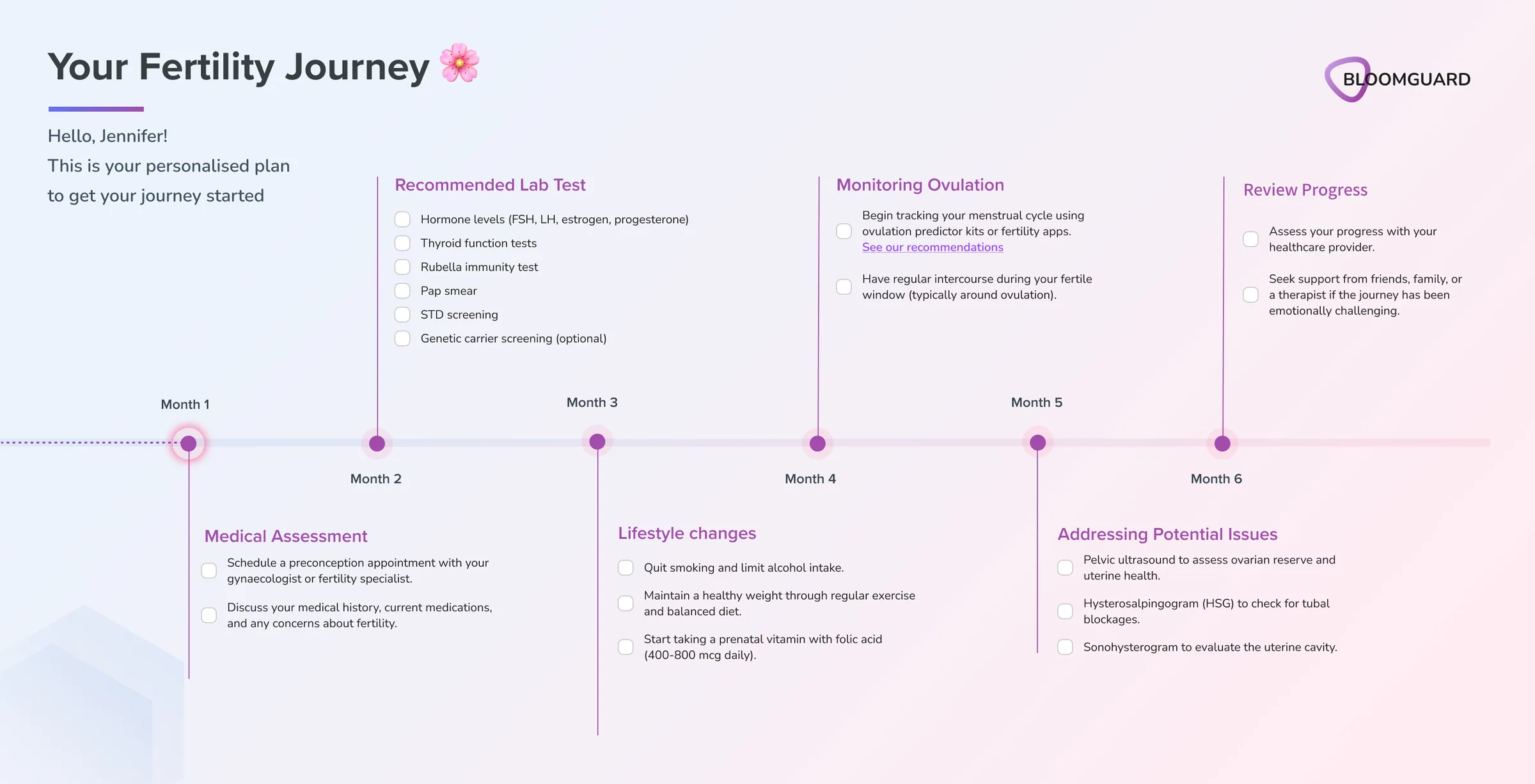
The product isn’t trying to answer every fertility question in isolation. It’s helping people navigate the next decision.
From strategy to experience
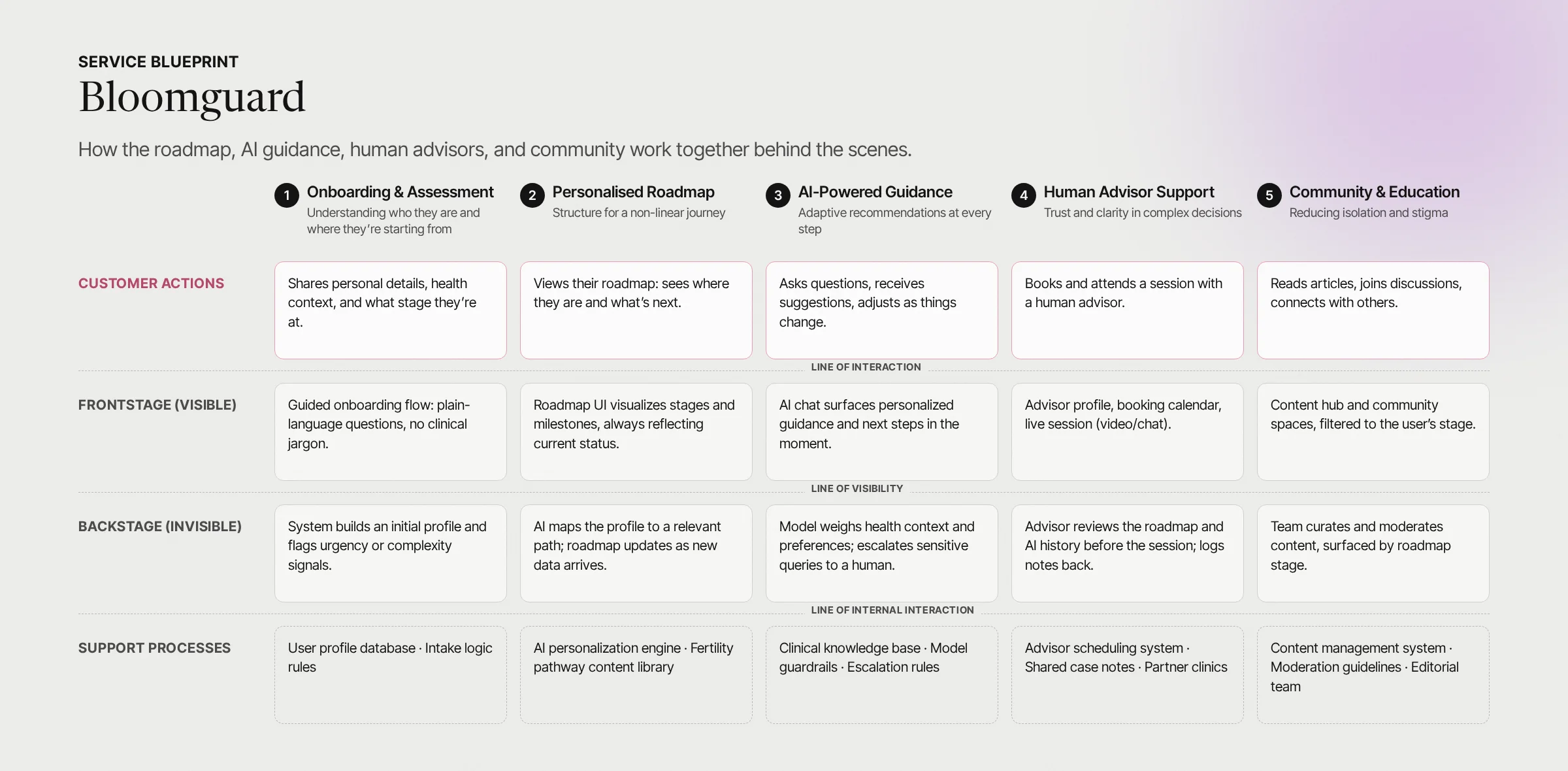
We translated the product strategy into an end-to-end experience, from discovering BloomGuard to navigating the roadmap and connecting with professional support.
Landing page
Introduces the value proposition plainly: a personalised roadmap, free resources and events, and access to fertility advisors. Testimonials and an FAQ address the practical and often unspoken questions people have before getting started.
The roadmap
The core, and the point where the proposition becomes tangible: medical assessment, recommended lab tests, lifestyle changes, ovulation monitoring, potential issues and progress reviews.
Human support
Fertility is sensitive and high-stakes, so when someone needs more than the roadmap can provide, BloomGuard connects them with a fertility advisor. Booking is straightforward: discover, review credentials, compare profiles, check availability, give consent, confirm.
Where AI stops
AI handles orientation and logistics. Human professionals handle diagnosis, treatment and clinical risk. Knowing when the system should stop answering matters as much as knowing what it can answer.
What the project taught us
Using Lean Startup and Double Diamond methods, we developed BloomGuard within a team sprint, working with real constraints around time, participant access and technical feasibility. Rather than treating the prototype as a finished product, we used those constraints to identify what we would investigate next.
What comes next
Design for when the journey doesn’t go to plan
The current experience is optimised for progress, but fertility journeys don’t always move forward. A meaningful product needs to support miscarriage, failed cycles, negative results and prolonged uncertainty, with both practical guidance and emotional support.
Keep the roadmap as the spine
Our strongest decision was making the roadmap the connective spine of the product. It gives AI, advisors and community a clear role, because they support the journey rather than compete for attention.
Reflection
The goal wasn’t to give people more fertility information. It was to help them understand what to do with it.
The next version isn’t about adding more features. It’s about making the journey genuinely responsive to the person moving through it.