RIX PowerCart
Improving the passenger experience at Riga International Airport.
- Service design
- Passenger research
- Physical prototyping
- Client
- Riga International Airport (RIX)
- Role
- Service Designer
- Timeline
- Sep 2023 – Jan 2024
- Research
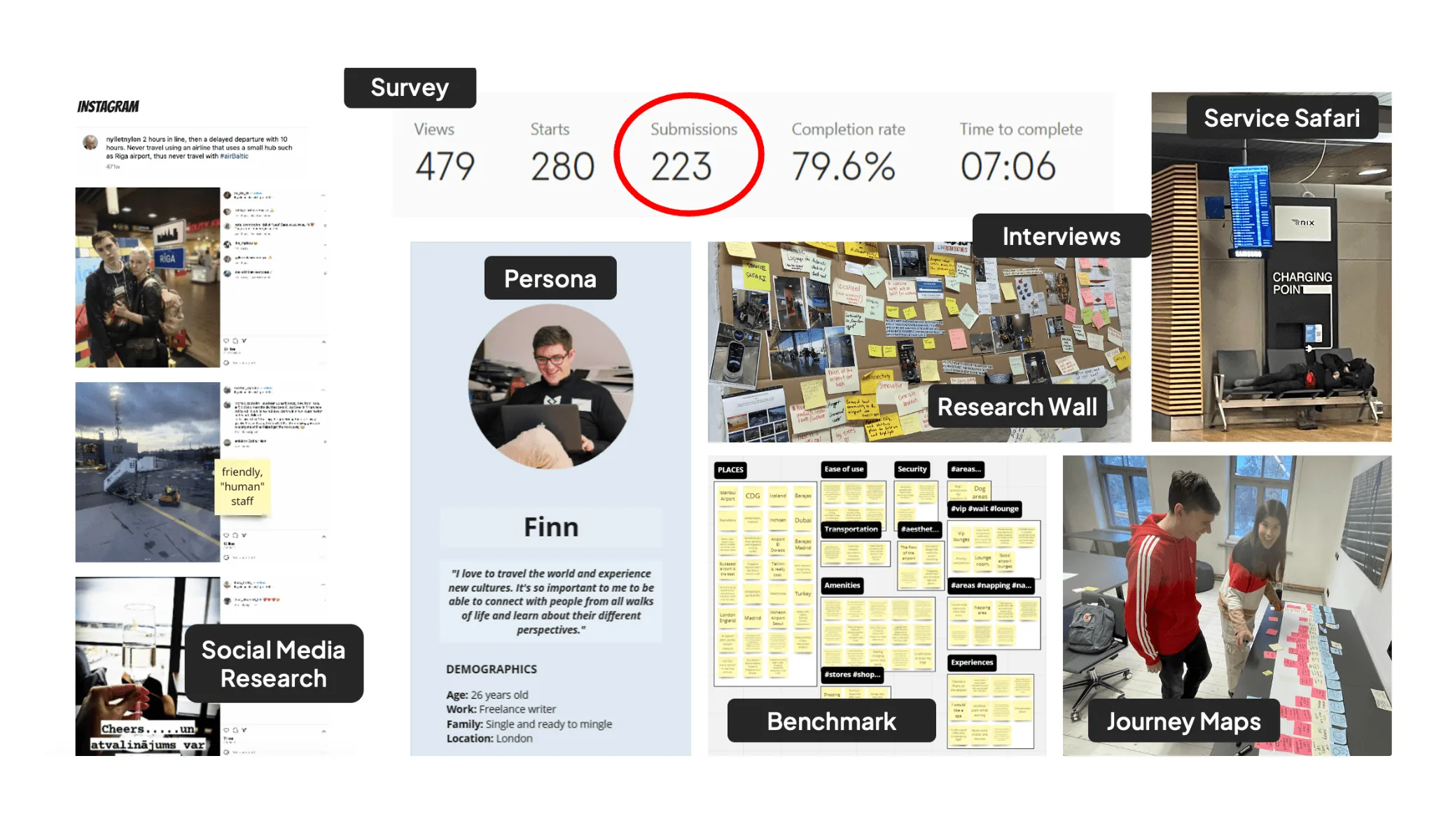
- 300 passenger voices

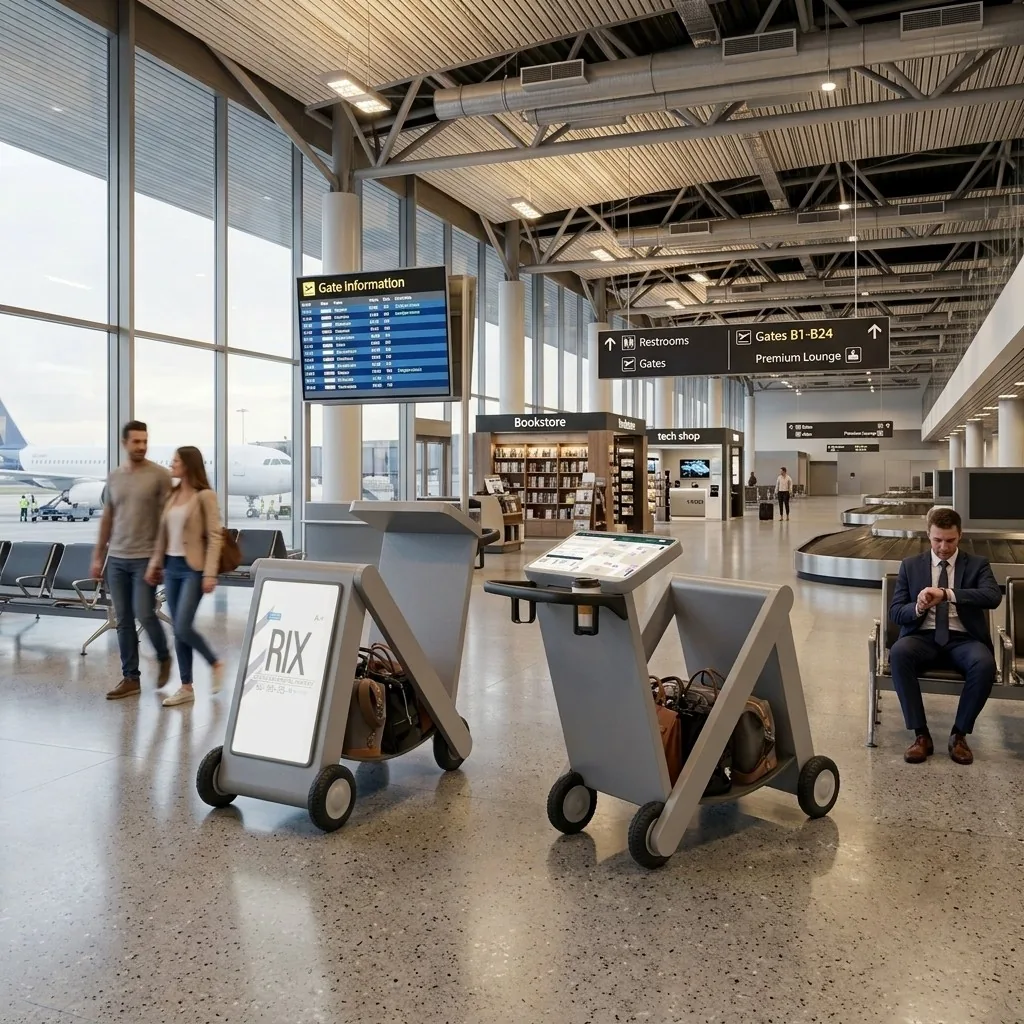
RIX PowerCart is a service design concept developed with Riga International Airport to make existing airport services easier to access during waiting time. Our response was a mobile service station that brings the airport to the passenger.
TL;DR
Passengers weren’t exploring the airport, not because there was nothing to do, but because they didn’t feel confident leaving their gate. The services they needed already existed. They just didn’t know where, or felt too anchored to their charger and luggage to go and find them.
A mobile service cart, tested as a real retrofitted prototype on an existing RIX luggage cart, that brings charging, luggage storage, navigation and live flight information to the passenger, instead of expecting the passenger to find them.
Presented to the RIX board, who folded the concept into the airport’s roadmap for its new terminal, Rail Baltica terminal and Airport City expansion, and opened a live conversation with Danish cart manufacturer ITS.
The airport thought passengers were bored. We found they were stuck.
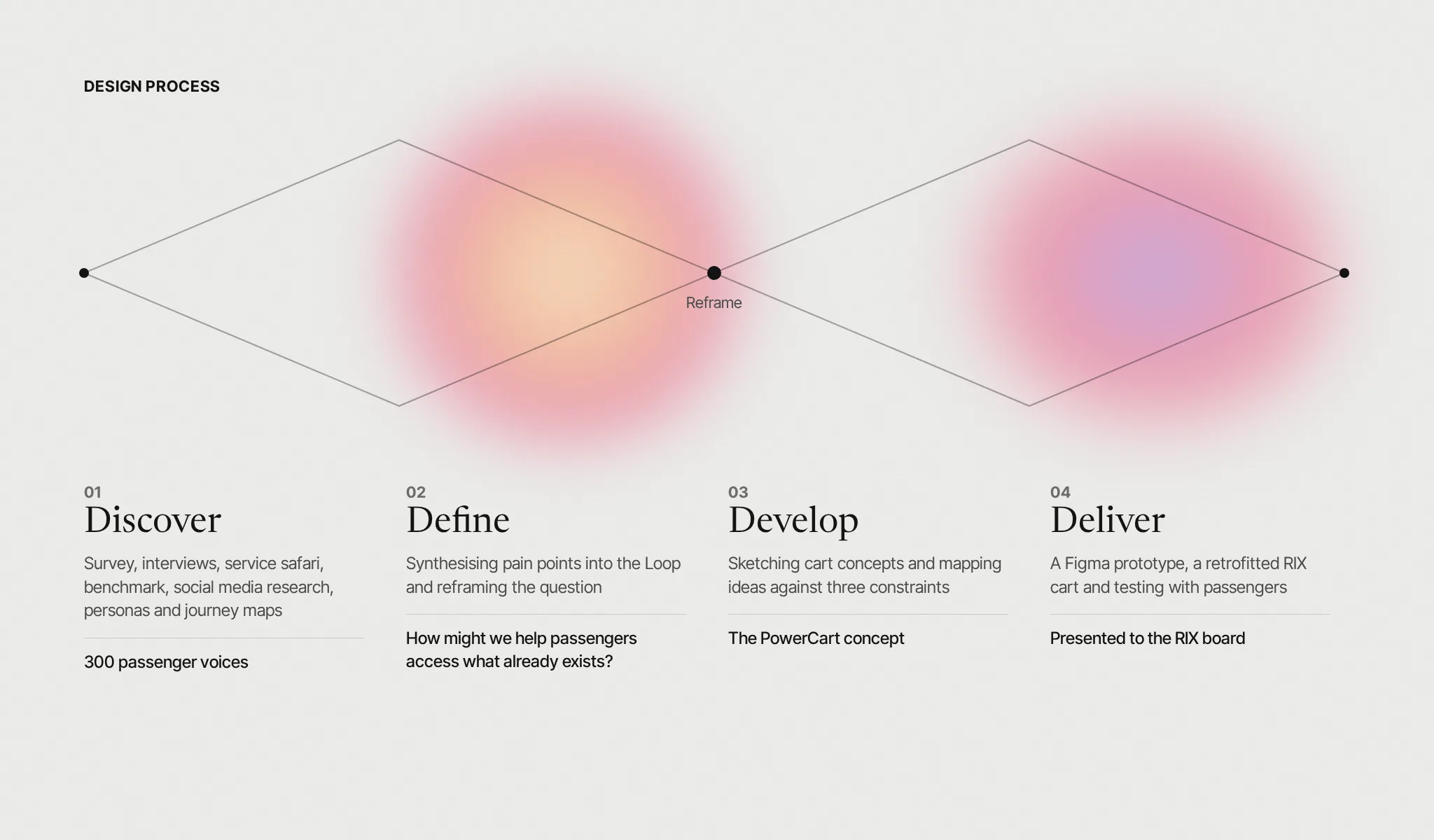
RIX wanted to improve the passenger experience during waiting time. The initial assumption was simple: give people more things to do. But our research told a different story.
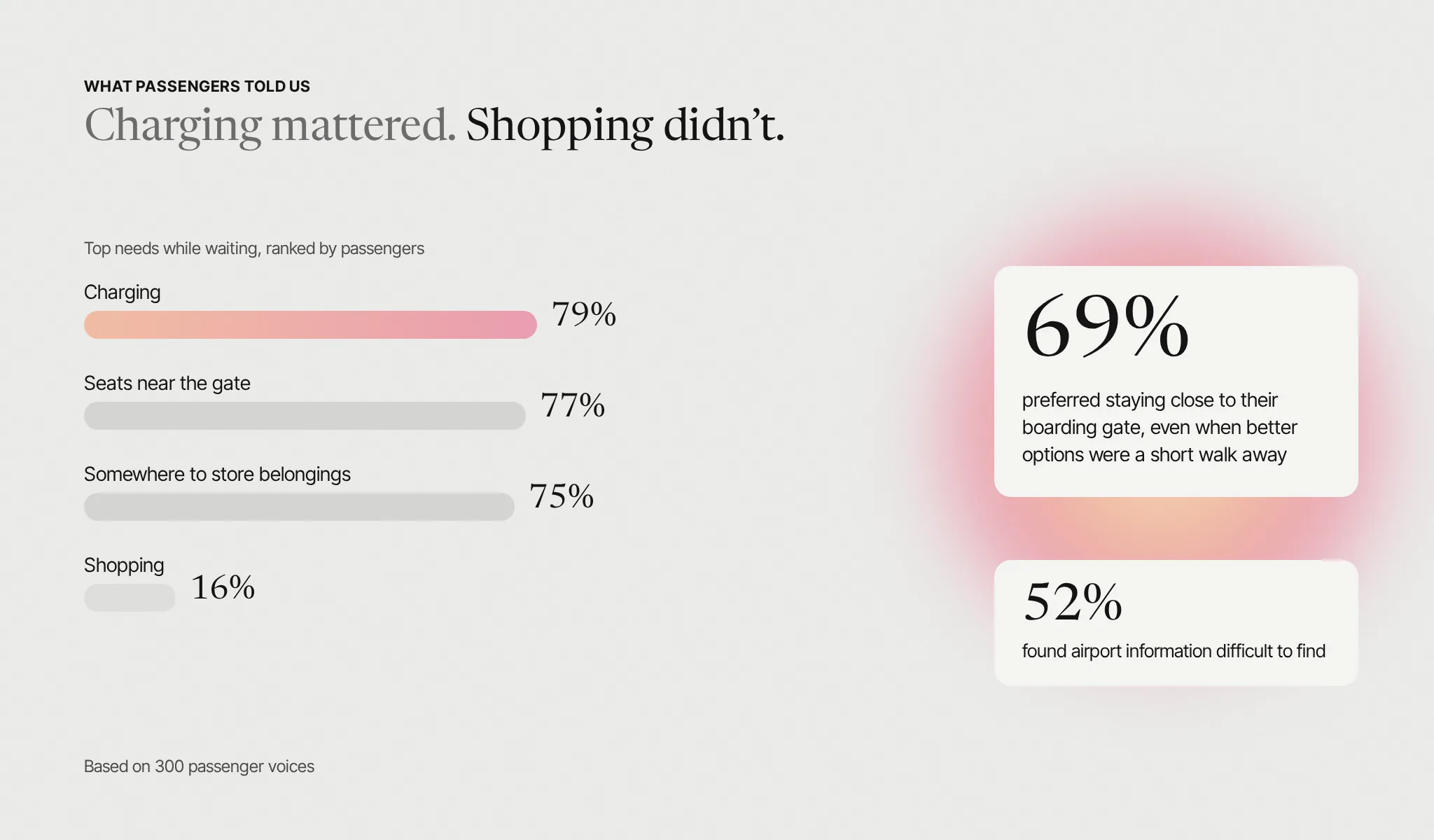
What passengers told us
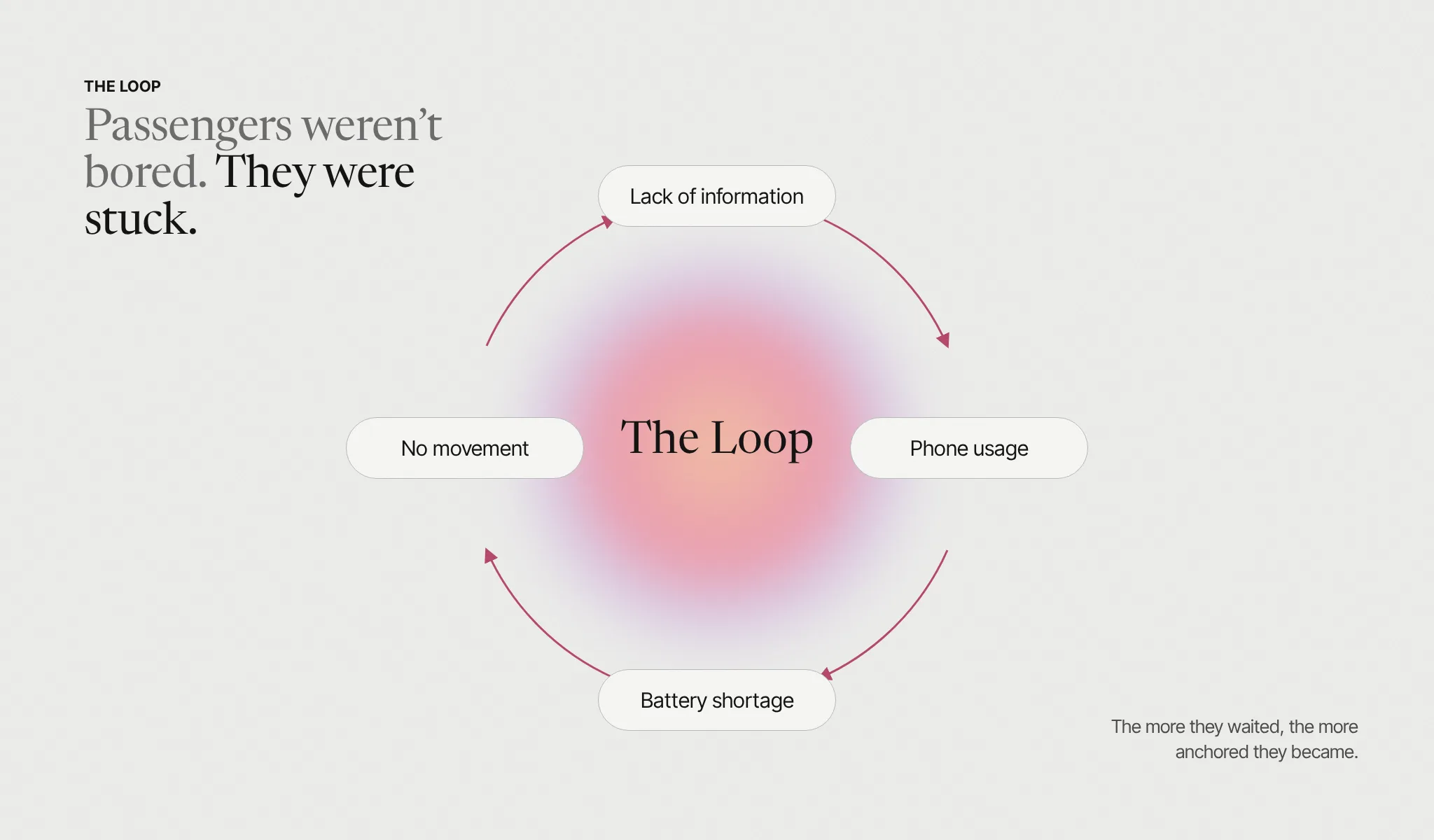
We called it the Loop
The issue wasn’t a lack of services. It was the friction of accessing them. Passengers didn’t always know what was available, didn’t want to risk missing their flight, and were often physically anchored by their luggage and charging needs.
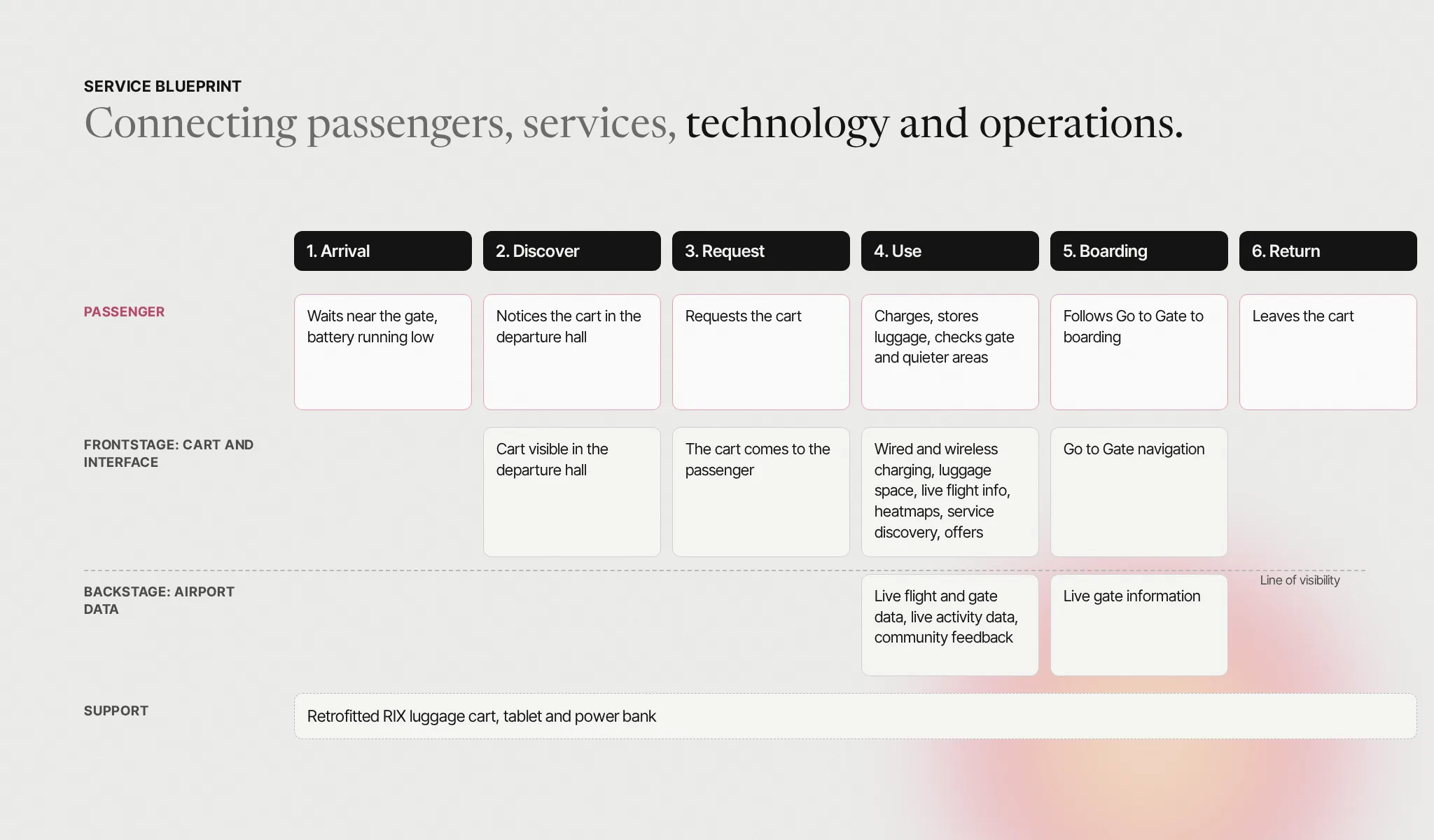
A passenger sits near the gate, starts using their phone, the battery drops, they plug in, they stay near the socket, and the airport feels like there’s nothing else to do. The more they waited, the more anchored they became.
Design principle
Don’t ask passengers to go find the service. Bring the service to them.
Three recurring constraints
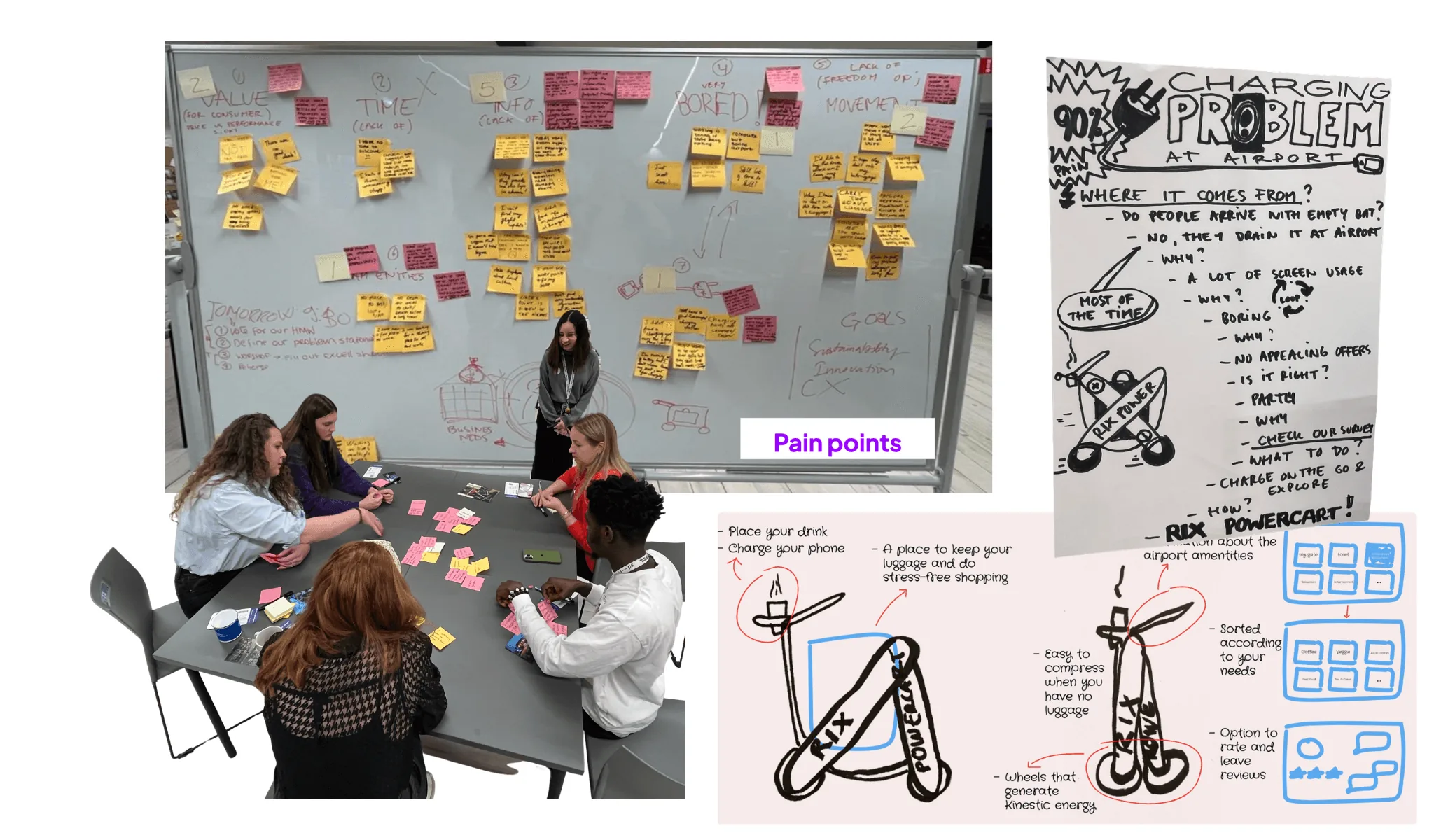
We mapped our ideas against the constraints we kept hearing in research. The PowerCart emerged as the concept that could address all three at once.
Movement
Passengers didn’t feel free to leave their gate.
Physical support
Luggage and charging needs kept them anchored.
Information
Existing services weren’t always visible or easy to find.
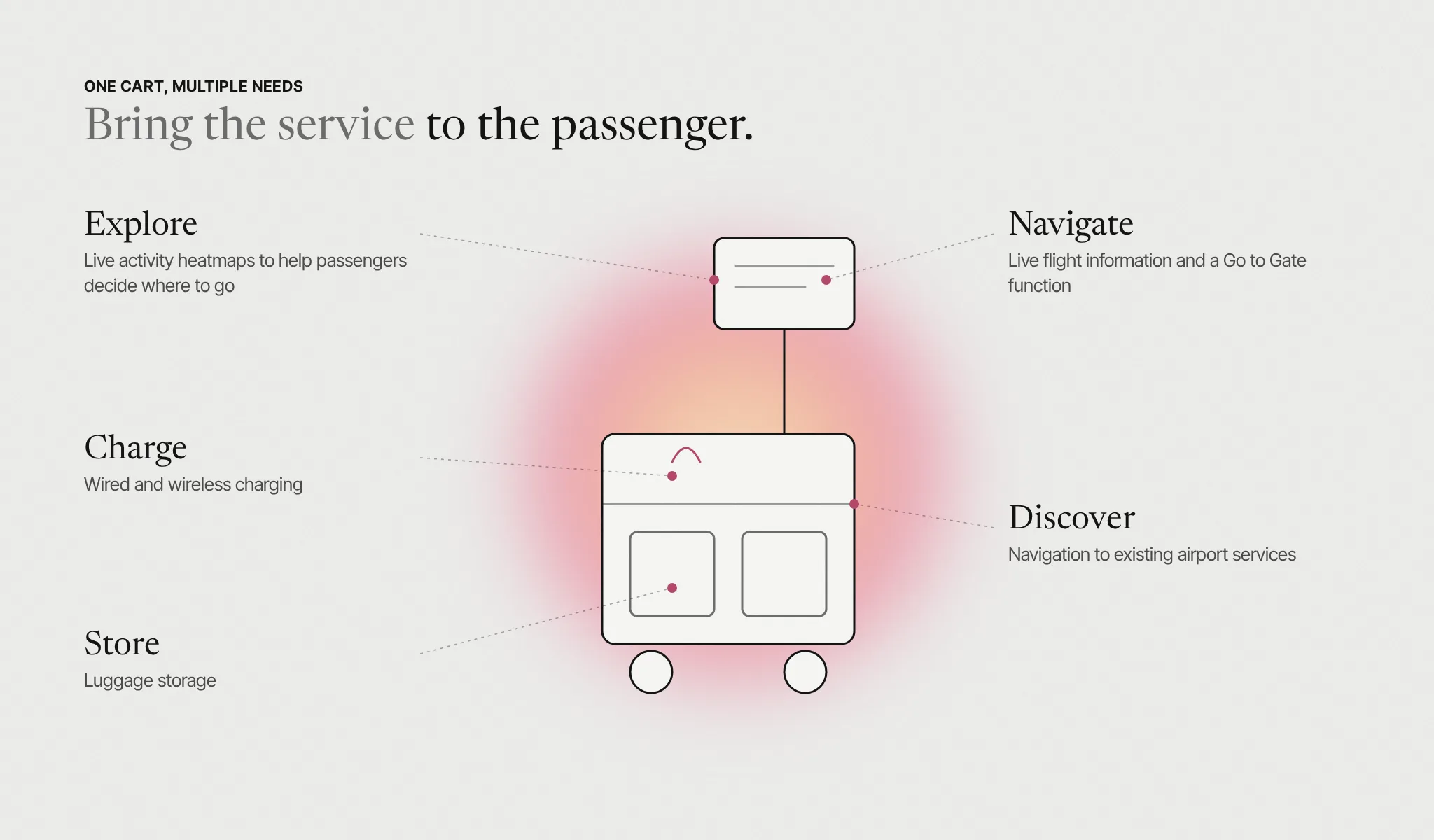
One cart, multiple needs
The important part wasn’t the number of features. It was that each feature answered something we had heard or observed in research.
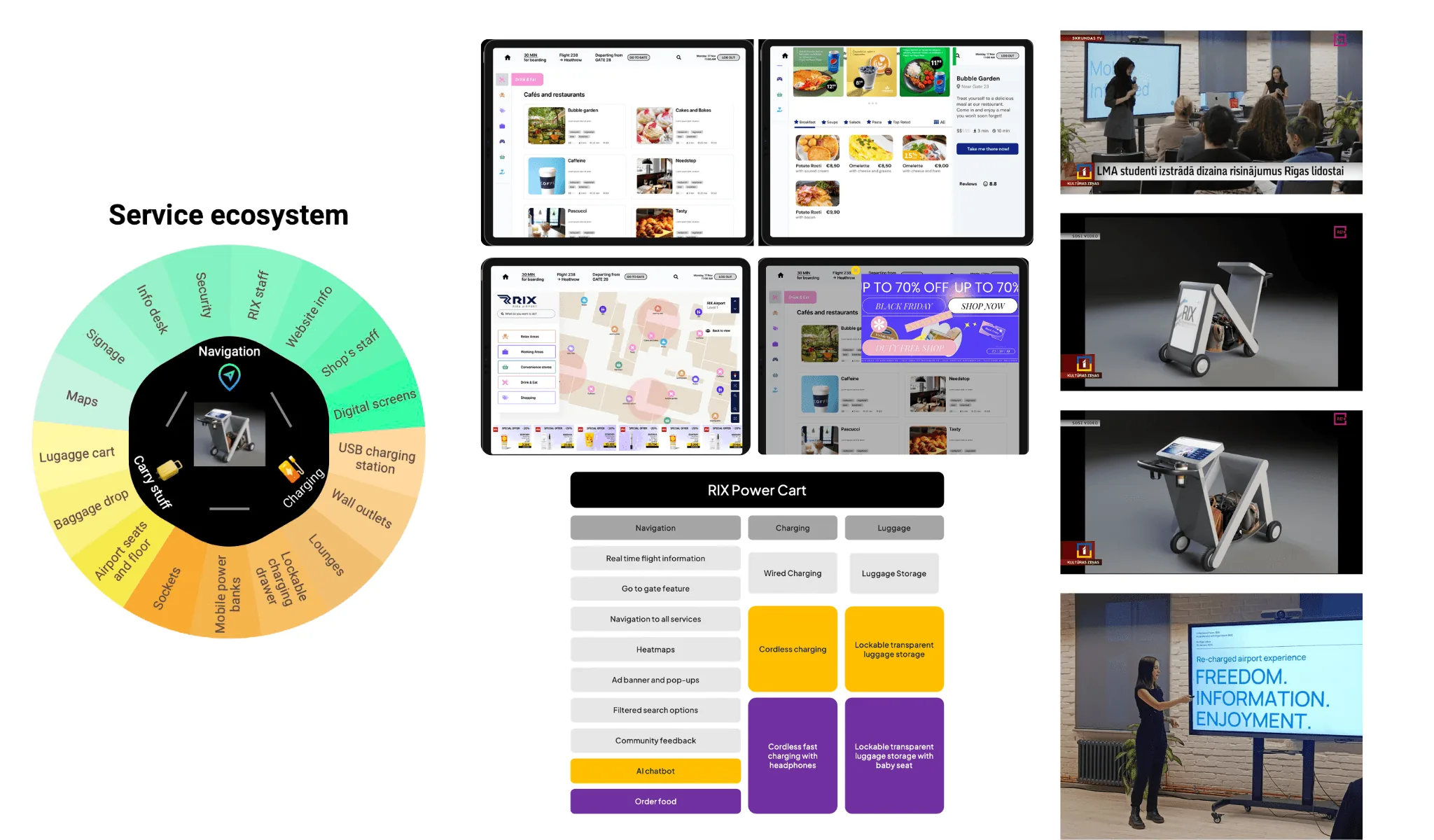
Designing the digital layer
We paired the physical cart with a digital interface rather than treating it as a standalone object. The prototype included live flight and gate information, Go to Gate navigation, airport service discovery, live activity heatmaps, community feedback, and food and service offers.
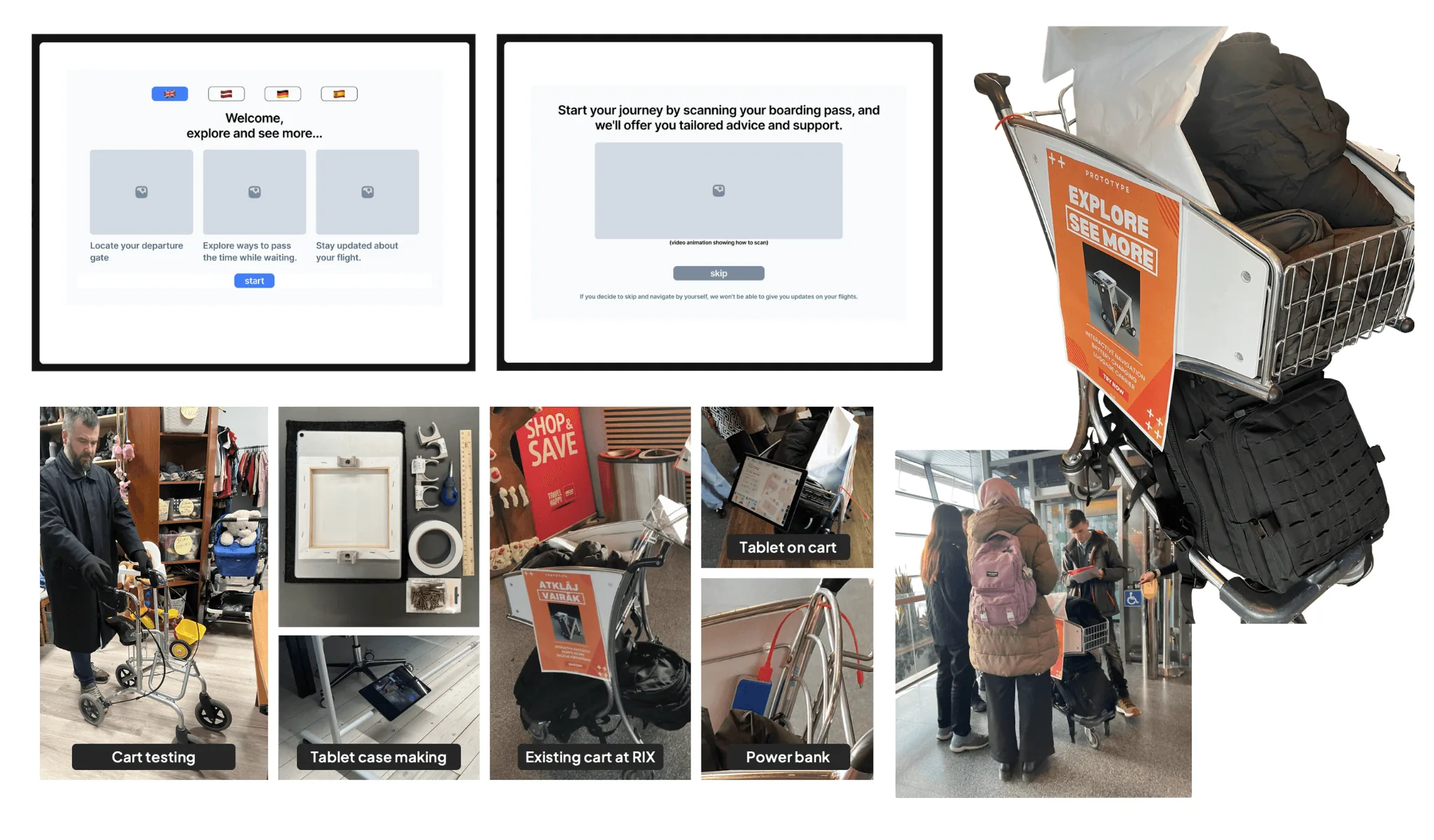
We deliberately built two prototypes: a Figma prototype for the digital experience, and a retrofitted physical cart using an existing RIX luggage cart, a tablet and a power bank. The physical prototype let us test the concept as an object in the environment, rather than asking passengers to imagine how it might work.
Testing with passengers
We put the physical prototype in front of passengers and tested the core functions separately.
Navigation generated the strongest response
Participants valued live gate information and the heatmap, particularly for finding quieter areas.
Charging confirmed the core need
Participants preferred mobile charging to finding a socket or renting a charger, with some saying they would pay around €2 for the service.
Luggage storage was more mixed
Some saw little need for it; others considered it valuable during longer layovers. Not every feature needed to survive the prototype, so it became something we’d test further rather than treat as proven.
What this project taught us
Sometimes the best service isn’t another destination. It’s a better way to get there.
The strongest lesson wasn’t about designing a better cart. It was about looking for value that already exists but isn’t being accessed. RIX didn’t necessarily need more services. Passengers needed a way to reach the ones already there.